




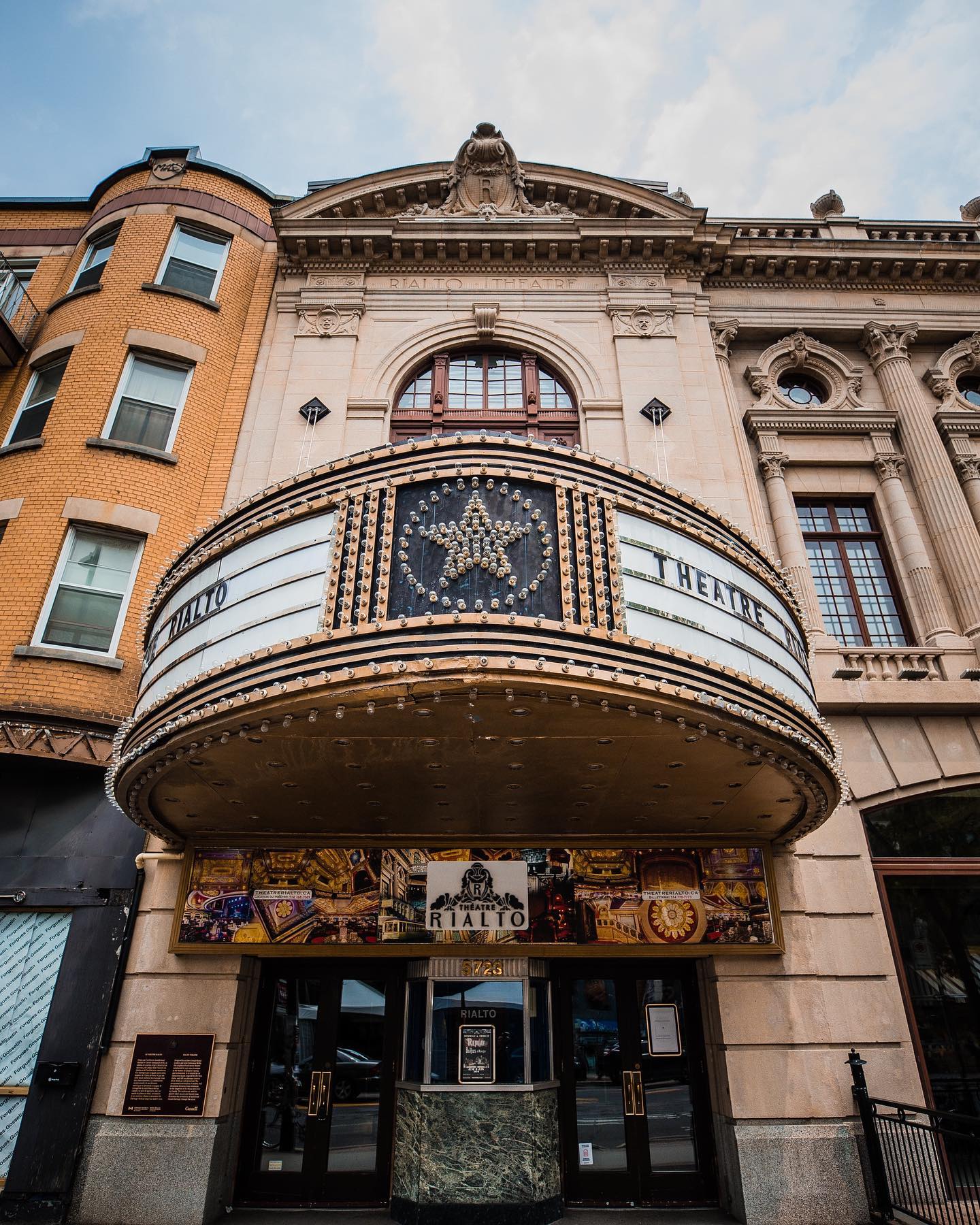
If you walk north on Parc Avenue past Bernard, you’ll see it: columns, cornices, and a flicker of gold leaf catching the light—if you don't see its marquee lighting up the night first, anyway. All of this is foreshadowing how the Rialto Theatre has the power to stop you in your tracks.
Built nearly a century ago to mimic the Paris Opera, it’s less a building and more a stage set that’s somehow survived decades of urban reinvention, commercial failure, and civic apathy. It has, improbably, become one of Montreal’s most beloved cultural landmarks.
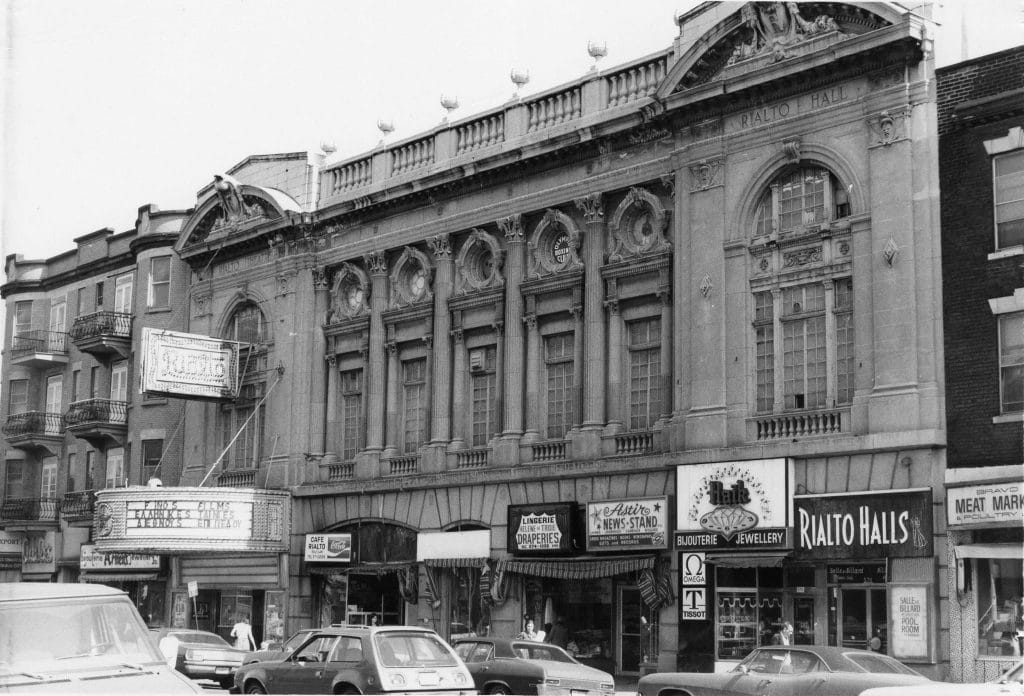
One of the finest theatres in history
Designed in 1923 by architect Joseph-Raoul Gariépy, the Rialto was never just another neighbourhood movie house. Its Beaux-Arts exterior, rendered in artificial stone by Canadian Benedict Stone Ltd., gave way to an interior dripping in neo-Baroque excess: painted silk panels, gilded mouldings, an illuminated stained-glass dome. Emmanuel Briffa, Montreal’s most prolific theatre decorator—responsible for over 200 cinema interiors across North America—called it one of his finest. He wasn’t wrong.
Poursuivez « From opera house to haunted relic to hot ticket, Montreal's Rialto Theatre refuses to die »
Aucun mot de passe. Aucun paiement. Ouverture immédiate.
Déjà membre? Se connecter


Commentaires
Welcome to The Main's comments section!
Share your thoughts and join the conversation. Please be respectful and constructive.
Aucun commentaire pour le moment. Soyez le premier !