
How Little Portugal carved out its place in the Plateau

From postwar migration to piri piri chicken, Azorean immigrants transformed an iconic Montreal neighbourhood with enduring community.

Phylida Tuff-West

Phylida Tuff-West

17 octobre 2025- Read time: 5 min
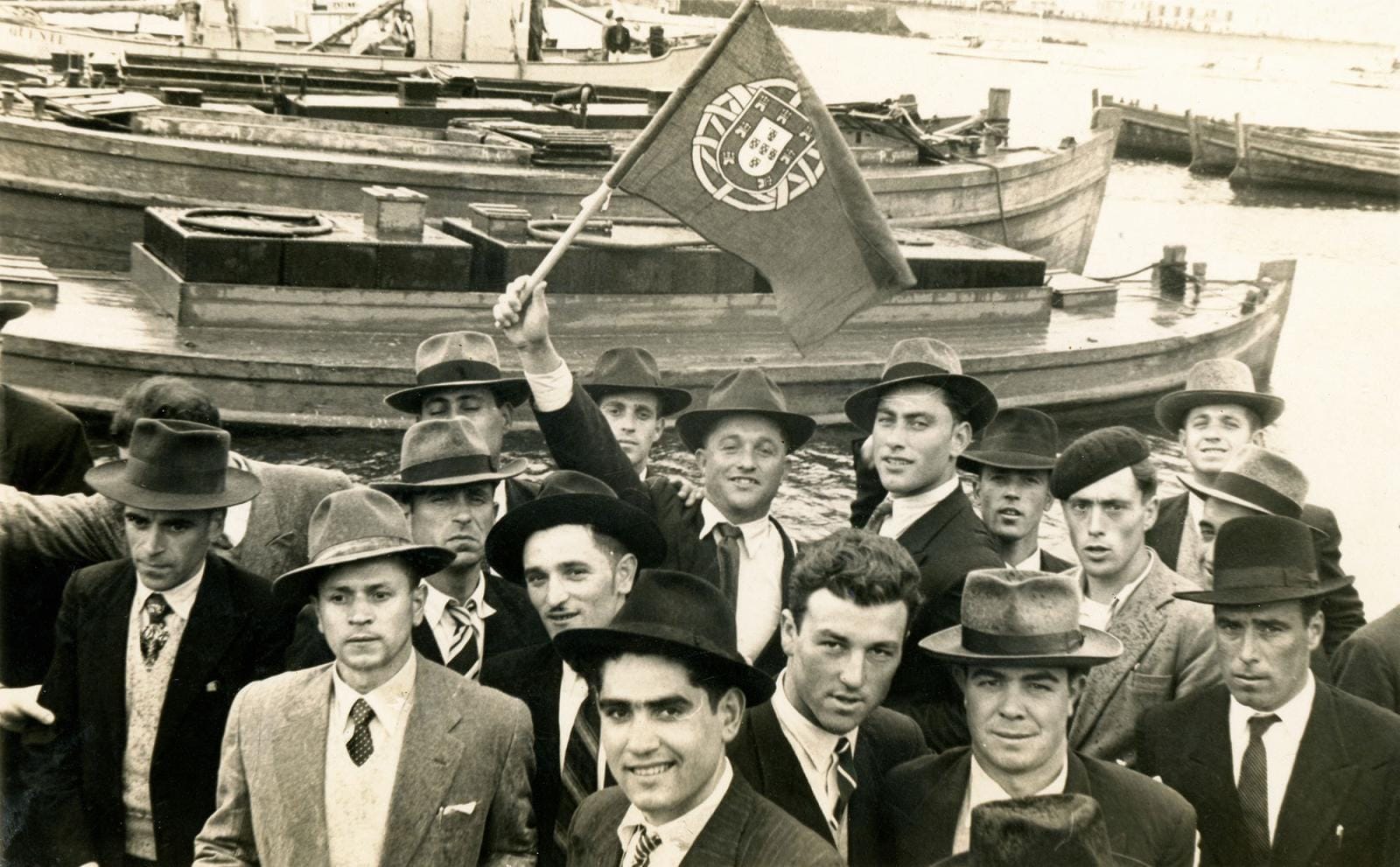
How Little Portugal carved out its place in the Plateau"On April 23, 1954, a group of Azorean emigrants waits in the port of Ponta Delgada in São Miguel, before departing on board the ship Homeland headed for Halifax." | Photograph: José-Louis Jacome’s personal collection / Encyclopédie du MEM

The Home Hardware at the corner of Saint-Laurent and Rue Vallières greets passersby with a split display: on one side, a collection of seasonal building supplies, and a miniature homage to Portugal on the other.

The patriotic arrangement that extends to the store’s interior shelves, stocked with terracotta cookware and a flock of brightly painted Galo de Barcelos roosters, a symbol of good luck in Portuguese folklore. Officially named Quincaillerie Home Hardware Azores, the business reflects more than its function. Like much of the built environment along Saint-Laurent between Avenue des Pins and Marie-Anne Street, the store is part of the Plateau, but its name and imagery situate it within a cultural landscape that belongs to Little Portugal.

Article réservé aux membres

Découvrez Montréal autrement. Rejoignez la communauté The Main.

Lisez cet article gratuitement.

Entrez votre courriel pour débloquer votre premier article et recevoir The Bulletin, notre infolettre sur la bouffe, l’art et la culture locale.

  • 5 articles gratuits par mois
  • Sauvegardez vos adresses et guides
  • Infolettre hebdo The Main Brief
  • Restez branché sur la culture montréalaise

Allez plus loin. Devenez Insider.

Faites partie d’une communauté qui soutient les histoires montréalaises indépendantes et célèbre les gens qui font vivre la culture.

Subscribe
  • Accès illimité à tous les articles
  • Contenu exclusif & perspectives locales
  • Offres spéciales et invitations à nos événements
  • 10 % de rabais à la boutique
  • Soutenez les médias locaux indépendants

Déjà membre? Se connecter

Related articles

NDG's Empress Theatre survived a century of change. Can it survive neglect?
Version Anglaise
Kaitlyn DiBartolo

NDG's Empress Theatre survived a century of change. Can it survive neglect?

Montreal's last (and Canada's only) Egyptian Revival movie palace reinvented itself for decades. Now it's been empty for 33 years.

When McGill med students went grave-robbing for science
Version Anglaise
J.P. Karwacki

When McGill med students went grave-robbing for science

The law demanded they learn anatomy but made dissection illegal, so for nearly a century, stolen corpses were tobogganed down Mount Royal to a folk hero janitor who paid cash, no questions asked.

How Little Portugal carved out its place in the Plateau
Version Anglaise
Phylida Tuff-West

How Little Portugal carved out its place in the Plateau

From postwar migration to piri piri chicken, Azorean immigrants transformed an iconic Montreal neighbourhood with enduring community.

How 24 Stanley Cups turned the Montreal Canadiens into a religion
Version Anglaise
The Main

How 24 Stanley Cups turned the Montreal Canadiens into a religion

From dynasty to drought: a brief-ish look at the making of Montreal's most devotional sports franchise.

The rise and fall of Le Palais des Nains, the palace where tourists became giants
Version Anglaise
The Main

The rise and fall of Le Palais des Nains, the palace where tourists became giants

For over 60 years, the fully functional home of two circus veterans became a Montreal tourist attraction where everything was scaled down to their three-foot-tall size.

A butcher's gamble, a forgotten tavern, and how the Mile End earned its name
Version Anglaise
The Main

A butcher's gamble, a forgotten tavern, and how the Mile End earned its name

From a Durham County butcher shop and Massachusetts tavern keepers to a global creative district, the real story's one historians got wrong for decades.