



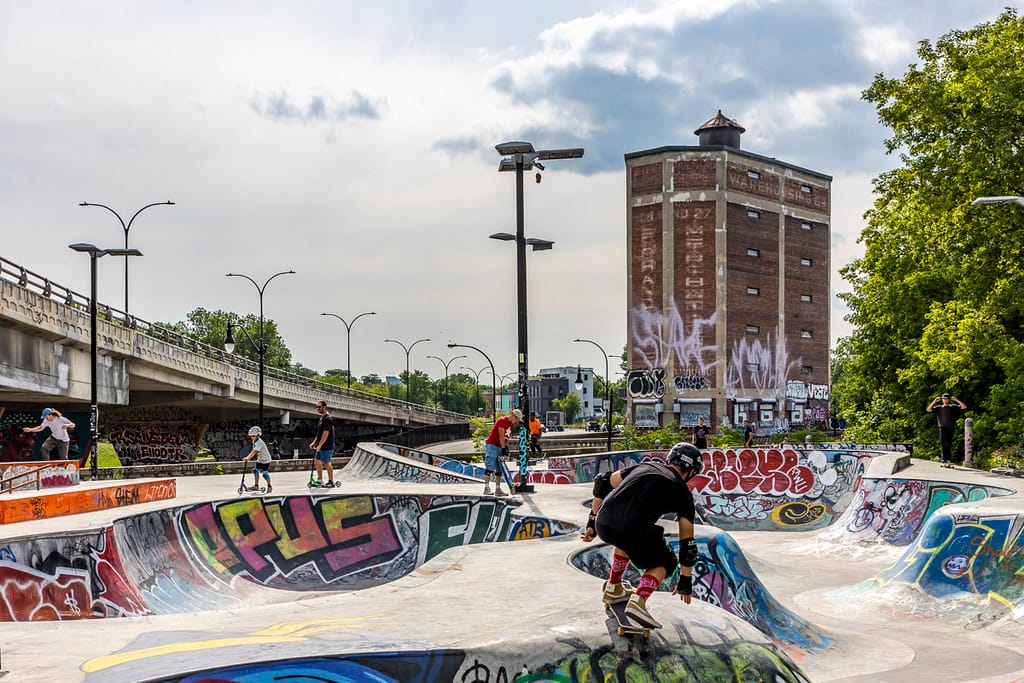
The Entrepôt Van Horne's seven storeys of exposed concrete and brick along Van Horne Avenue, a nearly windowless façades rising out of the wedge of land between Saint-Laurent Boulevard and the CP rail corridor, has become a icon of the city's northside skyline over the years. Even its rusted water tower punching up above the roofline.
Over its century of existence it's been a grain warehouse, document storage depot, and canvas for artists, and now a source of neighbourhood debate over what its future should be. After years of back-and-forth between developer, borough, and the public, that future is finally taking shape.
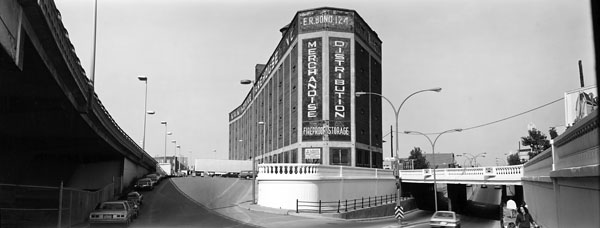
A quick backstory
The warehouse was built in 1924 by Wilfrid Duquette, a flour, grain and coal merchant who had been operating along Saint-Laurent since the early 1900s. The site was ideal: it sat directly adjacent to the Canadian Pacific transcontinental rail line, making it a natural hub for moving goods between the rail network and the city's streets. Three freight elevators handled cargo inside, while thick masonry walls kept merchandise temperature-stable and a sophisticated dry-sprinkler system guarded against fire. The water tower atop the building, installed as part of that fire-suppression infrastructure, stopped being used in 1992 and remains the last surviving industrial water tower in the neighbourhood.
Keep reading “Who Will the Entrepôt Van Horne Belong To?”
The Main is Montreal's city magazine. We write the stories about this city nobody else is telling.
We're independent and reader-supported. Your support keeps us going.
Your email costs you nothing and opens the rest of this story now. It also means the next one reaches you on a Thursday, instead of disappearing into a feed.
No password. No payment. Opens instantly.
Already a member? Sign in
![The Bulletin: Limited Edition Donuts, the Laotian & Cambodian New Year, and Axe Throwing With Syrup [Issue #176]](/_next/image?url=https%3A%2F%2Fstorage.ghost.io%2Fc%2F00%2Fe5%2F00e5bf23-2b72-4a48-92bb-496245b79d2a%2Fcontent%2Fimages%2F2026%2F04%2F666611733_1552423200221238_6290974934334965786_n.jpg&w=256&q=75)


Comments
Welcome to The Main's comments section!
Share your thoughts and join the conversation. Please be respectful and constructive.
No comments yet. Be the first!