



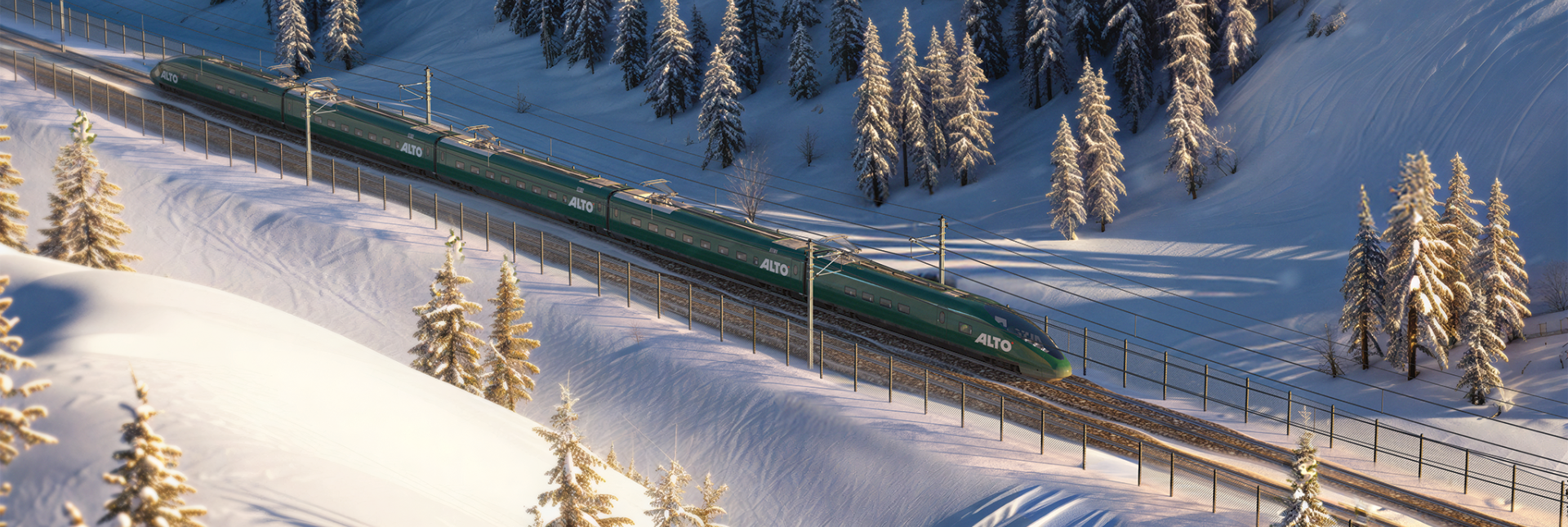
The federal government revealed plans last week to make the Naitonal Capital Region-to-Montreal connection the inaugural stretch of a massive rail infrastructure initiative spanning Ontario and Quebec.
Transport Minister Steven MacKinnon laid out the vision on December 12 alongside Martin Imbleau, who leads Alto, the Crown corporation steering the venture. Their choice: a roughly 200-kilometre line between the two cities, including a Laval stop, as the logical starting point for what's been billed as one of the country's largest-ever public works undertakings.
Why this route first? Geography and logistics. The terrain is flatter and more straightforward than other portions of the eventual Toronto-to-Quebec City corridor, allowing construction crews in both provinces to mobilize simultaneously. Officials are targeting 2029 for breaking ground—an ambitious timeline given Canada's track record with major transit projects.
The broader network would eventually stretch about 1,000 kilometres, with trains hitting 300 kilometres per hour. That speed could slash the Montreal-Toronto journey to three hours, down from the current five-plus. The Ottawa-Montreal run would drop to roughly an hour.
Price tag estimates sit between $60 billion and $90 billion for the complete system. Imbleau declined to offer a specific figure for the initial segment, noting it will serve as a "test case" for the larger build-out. Federal projections suggest the project could inject $35 billion into Canada's GDP and generate more than 50,000 construction jobs.
Alto plans to launch public consultations in January, running for three months. Those sessions—both in-person and virtual—will help determine the precise route, station placements, and mitigation strategies for community and environmental concerns. Indigenous consultation will continue throughout design, assessment, and construction phases.
The announcement drew mixed reactions. Environmental advocates praised the electric rail alternative to short flights and highway trips. Conservative critics called the budget excessive and questioned the timeline's feasibility. Urban planning experts pointed out that the real ridership benefits won't materialize until the Greater Toronto Area connects to the network—likely not until 2035 or later.
The timing carried a certain irony: the news came one day after Via Rail passengers endured a 12-hour overnight delay between Toronto and Ottawa due to mechanical failures. Canada remains the only G7 nation without any form of high-speed rail service.
Whether this attempt succeeds where previous proposals have stalled remains the central question. Prime Minister Mark Carney's government has framed the project as a cornerstone of its infrastructure agenda, promising to accelerate approvals and streamline regulatory processes. The 2029 construction start will be the first real test of those commitments.


Comments
Welcome to The Main's comments section!
Share your thoughts and join the conversation. Please be respectful and constructive.
No comments yet. Be the first!