
The Main

Montreal's Cultural Directory

Help us improve! Share your thoughts on how we can make your experience better.

Leave feedback

For partnerships and collaborations:

partnerships@themain.com

Content

  • Articles
  • Food & Drink
  • Arts & Culture
  • History Lesson
  • Bulletin
  • Events

Guides

  • All Guides
  • Best Restaurants
  • Best Cafés
  • Best Bars
  • Best Brunch
  • Best Bakeries

Explore Montreal

  • Browse Directory
  • Restaurants
  • Bars
  • Cafés
  • Bookstores

About

  • About us
  • Subscribe
  • Shop
  • Advertise
  • Pitch us
  • RSS Feed

Legal

  • Terms of service
  • Membership Terms
  • Privacy Policy
Follow us
InstagramTwitterTiktokLinkedin

The Main Media Inc. 2026

✦ Built By Field Office
    The Main

    Montreal's Cultural Directory

    Help us improve! Share your thoughts on how we can make your experience better.

    Leave feedback

    For partnerships and collaborations:

    partnerships@themain.com

    Content

    • Articles
    • Food & Drink
    • Arts & Culture
    • History Lesson
    • Bulletin
    • Events

    Guides

    • All Guides
    • Best Restaurants
    • Best Cafés
    • Best Bars
    • Best Brunch
    • Best Bakeries

    Explore Montreal

    • Browse Directory
    • Restaurants
    • Bars
    • Cafés
    • Bookstores

    About

    • About us
    • Subscribe
    • Shop
    • Advertise
    • Pitch us
    • RSS Feed

    Legal

    • Terms of service
    • Membership Terms
    • Privacy Policy
    Follow us
    InstagramTwitterTiktokLinkedin

    The Main Media Inc. 2026

    ✦ Built By Field Office
      --°C|Wednesday, April 8, 2026|
      Subscribe today to get 3 free articles per month.ROYALMOUNT Wants to Be Your Dining Destination for a Whole MonthGet 50% off your first 5 rides with Lyft
      InstagramTwitterTiktokLinkedin
      |
      Advertise
      The Main Logo
      Arts & CultureFood & DrinkHistory
      Explore Montreal
      Popular Guides
      • The Best Restaurants in Montreal
      • Best new Restaurants
      • Best Cafés
      • Unique Boutiques
      • Romantic Restaurants
      • Best Bookstores
      • See all Guides
      Neighbourhood
      • Downtown
      • Le Plateau-Mont-Royal
      • Mile End
      • Mile-Ex
      • Saint-Henri
      • See All
      Business Type
      • Restaurant
      • Café
      • Boutique / Store
      • Bar
      • Bakery
      • See All
      Near the Metro
      • Peel
      • Mont-Royal
      • Place-Saint-Henri
      • Place-d'Armes
      • Jarry
      • View all
      More
      Categories
      • Beyond Montreal

        Travel, adventure, and global perspectives.

      • Design

        The best of Montreal design.

      • History

        Stories, lessons, and context.

      • Newsletter

        Our weekly newsletter.

      • Weather
      • See all original stories
      Shop
      Subscribe
      Subscribe
      --°C|Wednesday, April 8, 2026|
      Subscribe today to get 3 free articles per month.ROYALMOUNT Wants to Be Your Dining Destination for a Whole MonthGet 50% off your first 5 rides with Lyft
      InstagramTwitterTiktokLinkedin
      |
      Advertise
      The Main Logo
      Arts & CultureFood & DrinkHistory
      Explore Montreal
      Popular Guides
      • The Best Restaurants in Montreal
      • Best new Restaurants
      • Best Cafés
      • Unique Boutiques
      • Romantic Restaurants
      • Best Bookstores
      • See all Guides
      Neighbourhood
      • Downtown
      • Le Plateau-Mont-Royal
      • Mile End
      • Mile-Ex
      • Saint-Henri
      • See All
      Business Type
      • Restaurant
      • Café
      • Boutique / Store
      • Bar
      • Bakery
      • See All
      Near the Metro
      • Peel
      • Mont-Royal
      • Place-Saint-Henri
      • Place-d'Armes
      • Jarry
      • View all
      More
      Categories
      • Beyond Montreal

        Travel, adventure, and global perspectives.

      • Design

        The best of Montreal design.

      • History

        Stories, lessons, and context.

      • Newsletter

        Our weekly newsletter.

      • Weather
      • See all original stories
      Shop
      Subscribe
      Subscribe

      More Arts & Culture

      After 20 Years of Recording Montreal, Breakglass Has a Label to Call Its Own
      Arts & Culture
      The Main

      After 20 Years of Recording Montreal, Breakglass Has a Label to Call Its Own

      After decades of recording artists like Wolf Parade, Patrick Watson, and Kaytranada, Breakglass Studios launches its first imprint with a thirteen-artist roster.

      The Immigrant Family Who Inherited a Neighbourhood
      Arts & Culture
      Léonie Poulin @ URBANIA

      The Immigrant Family Who Inherited a Neighbourhood

      When Richard and Shuping Guo bought Hochelaga's Dépanneur Populaire in 2001, they got more than a corner store. Their daughter Angelina's new book tells the rest of the story.

      Angine de Poitrine Is Exactly What the Internet Was Waiting For
      Arts & Culture
      J.P. Karwacki

      Angine de Poitrine Is Exactly What the Internet Was Waiting For

      A masked duo from Saguenay that started out as a joke gig tells us a lot about what we actually want from music right now.

      Our Picks of the Best Shows for this year's Jazz Fest
      Arts & Culture
      The Main

      Our Picks of the Best Shows for This Year's Jazz Fest

      From three jazz centennials to J Dilla, Willow, and UZEB at 50, the 2026 festival's best bets across free stages and ticketed venues.

      The Action Comedy Hollywood Forgot How to Make
      Arts & Culture
      Gianni Fiasche

      The Action Comedy Hollywood Forgot How to Make

      Vince Vaughn plays two versions of the same gangster, and that's barely the wildest thing about it.

      What to do this weekend (04.02–04.05)
      Arts & Culture
      The Main

      What to Do This Weekend (04.02–04.05)

      From Roman sculpture after dark to electroclash, grunge tributes, and an Easter cabaret with a costume policy: April 2 to 5, 2026.

      Our Predictions, Picks, and a Few Honest Upsets at the 98th Oscars
      Arts & Culture
      Gianni Fiasche

      Our Predictions, Picks, and a Few Honest Upsets at the 98th Oscars

      From Best Picture to Supporting Actress, here's who we think will win, who should win, and the wildcards worth watching.

      Montreal's St. Patrick's Day Parade: A 2026 Guide to the Oldest in Canada
      Arts & Culture
      The Main

      Montreal's St. Patrick's Day Parade: A 2026 Guide to the Oldest in Canada

      The 201st edition runs Sunday, March 22 along De Maisonneuve. Here's the route, the honourees, and the history behind it.

      Parquette Proves How Nightlife Can Work on Borrowed Time
      Arts & Culture
      Megan Pietrus

      Parquette Proves How Nightlife Can Work on Borrowed Time

      The queer nightlife hub knew the building would be demolished. They signed the lease anyway, and built something that will outlast it.

      The Most Predictable Oscars in Years Were Still Pretty Damn Good
      Arts & Culture
      Gianni Fiasche

      The Most Predictable Oscars in Years Were Still Pretty Damn Good

      One Battle After Another swept, PTA got his due, and Montreal snuck onto Hollywood's biggest stage.

      Montréal, ma belle is a Quiet Revolution in Immigrant Storytelling
      Arts & Culture
      Olivia Shan

      Montréal, Ma Belle is a Quiet Revolution in Immigrant Storytelling

      Xiaodan He spent 25 years finding the confidence to tell the story of a middle-aged, queer, Chinese mother choosing herself.

      Sirāt Is Hypnotic, Frustrating, and One of This Year's Best Oscar Nominations
      Arts & Culture
      Gianni Fiasche

      Sirāt Is Hypnotic, Frustrating, and One of This Year's Best Oscar Nominations

      Oliver Laxe's desert thriller follows a father into the Moroccan wilderness and past the limits of grief and obsession.

      Arts & Culture

      Ruelles Vertes: On Montreal’s Green Alleyway Labyrinth of Culture, Nature, and History

      How Montreal’s maze of alleyways creates behind-the-scenes space for locals' daily life in everything from culture and gardening to democratized public space.

      ByThe Main

      July 17, 2024 · 6 min read

      Ruelles vertes: On Montreal’s green alleyway labyrinth of culture, nature, and history
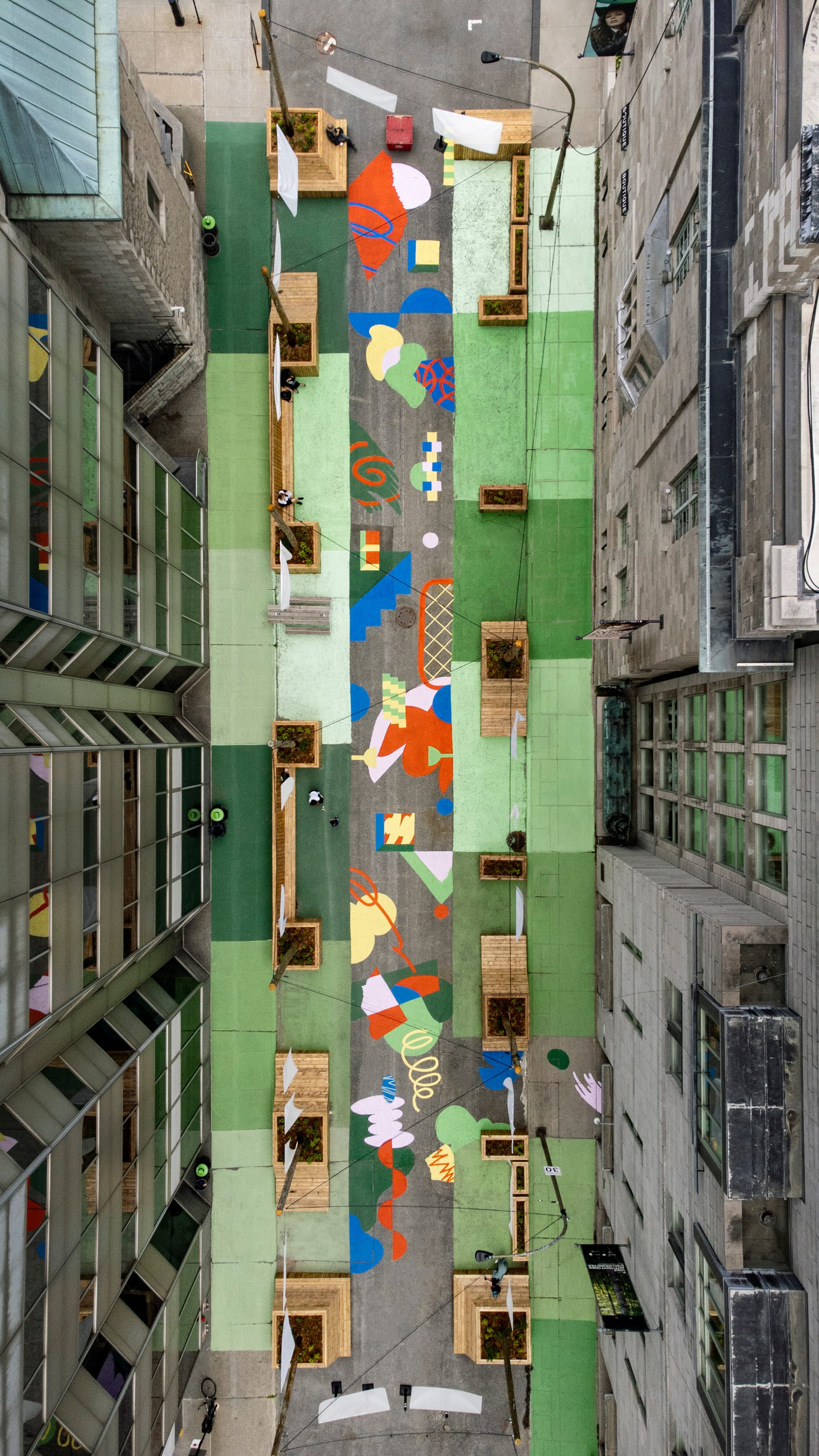
      McCord Stewart Museum’s Museum Alley, inspired by Montreal's rich history of ruelles vertes. | Photograph: Roger Aziz

      More Arts & Culture

      After 20 Years of Recording Montreal, Breakglass Has a Label to Call Its Own
      Arts & Culture
      The Main

      After 20 Years of Recording Montreal, Breakglass Has a Label to Call Its Own

      After decades of recording artists like Wolf Parade, Patrick Watson, and Kaytranada, Breakglass Studios launches its first imprint with a thirteen-artist roster.

      The Immigrant Family Who Inherited a Neighbourhood
      Arts & Culture
      Léonie Poulin @ URBANIA

      The Immigrant Family Who Inherited a Neighbourhood

      When Richard and Shuping Guo bought Hochelaga's Dépanneur Populaire in 2001, they got more than a corner store. Their daughter Angelina's new book tells the rest of the story.

      Angine de Poitrine Is Exactly What the Internet Was Waiting For
      Arts & Culture
      J.P. Karwacki

      Angine de Poitrine Is Exactly What the Internet Was Waiting For

      A masked duo from Saguenay that started out as a joke gig tells us a lot about what we actually want from music right now.

      Our Picks of the Best Shows for this year's Jazz Fest
      Arts & Culture
      The Main

      Our Picks of the Best Shows for This Year's Jazz Fest

      From three jazz centennials to J Dilla, Willow, and UZEB at 50, the 2026 festival's best bets across free stages and ticketed venues.

      The Action Comedy Hollywood Forgot How to Make
      Arts & Culture
      Gianni Fiasche

      The Action Comedy Hollywood Forgot How to Make

      Vince Vaughn plays two versions of the same gangster, and that's barely the wildest thing about it.

      What to do this weekend (04.02–04.05)
      Arts & Culture
      The Main

      What to Do This Weekend (04.02–04.05)

      From Roman sculpture after dark to electroclash, grunge tributes, and an Easter cabaret with a costume policy: April 2 to 5, 2026.

      Our Predictions, Picks, and a Few Honest Upsets at the 98th Oscars
      Arts & Culture
      Gianni Fiasche

      Our Predictions, Picks, and a Few Honest Upsets at the 98th Oscars

      From Best Picture to Supporting Actress, here's who we think will win, who should win, and the wildcards worth watching.

      Montreal's St. Patrick's Day Parade: A 2026 Guide to the Oldest in Canada
      Arts & Culture
      The Main

      Montreal's St. Patrick's Day Parade: A 2026 Guide to the Oldest in Canada

      The 201st edition runs Sunday, March 22 along De Maisonneuve. Here's the route, the honourees, and the history behind it.

      Parquette Proves How Nightlife Can Work on Borrowed Time
      Arts & Culture
      Megan Pietrus

      Parquette Proves How Nightlife Can Work on Borrowed Time

      The queer nightlife hub knew the building would be demolished. They signed the lease anyway, and built something that will outlast it.

      The Most Predictable Oscars in Years Were Still Pretty Damn Good
      Arts & Culture
      Gianni Fiasche

      The Most Predictable Oscars in Years Were Still Pretty Damn Good

      One Battle After Another swept, PTA got his due, and Montreal snuck onto Hollywood's biggest stage.

      Montréal, ma belle is a Quiet Revolution in Immigrant Storytelling
      Arts & Culture
      Olivia Shan

      Montréal, Ma Belle is a Quiet Revolution in Immigrant Storytelling

      Xiaodan He spent 25 years finding the confidence to tell the story of a middle-aged, queer, Chinese mother choosing herself.

      Sirāt Is Hypnotic, Frustrating, and One of This Year's Best Oscar Nominations
      Arts & Culture
      Gianni Fiasche

      Sirāt Is Hypnotic, Frustrating, and One of This Year's Best Oscar Nominations

      Oliver Laxe's desert thriller follows a father into the Moroccan wilderness and past the limits of grief and obsession.

      Arts & Culture

      Ruelles Vertes: On Montreal’s Green Alleyway Labyrinth of Culture, Nature, and History

      How Montreal’s maze of alleyways creates behind-the-scenes space for locals' daily life in everything from culture and gardening to democratized public space.

      ByThe Main

      July 17, 2024 · 6 min read

      Ruelles vertes: On Montreal’s green alleyway labyrinth of culture, nature, and history
      McCord Stewart Museum’s Museum Alley, inspired by Montreal's rich history of ruelles vertes. | Photograph: Roger Aziz

      Spiraling staircases, a skyline penetrated by steeples, grandfathered neon signs, and relics from Expo 67—the iconography of Montreal is often recognized in the built forms the city amassed throughout history.

      Then there’s where Montrealers live, and how they live there. No matter the neighbourhood, between streets and plex apartments, there’s a rich maze of overgrown pathways to explore in the green alleyways—also referred to as ruelles vertes—the proverbial local backstage to where Montreal’s daily life plays out.
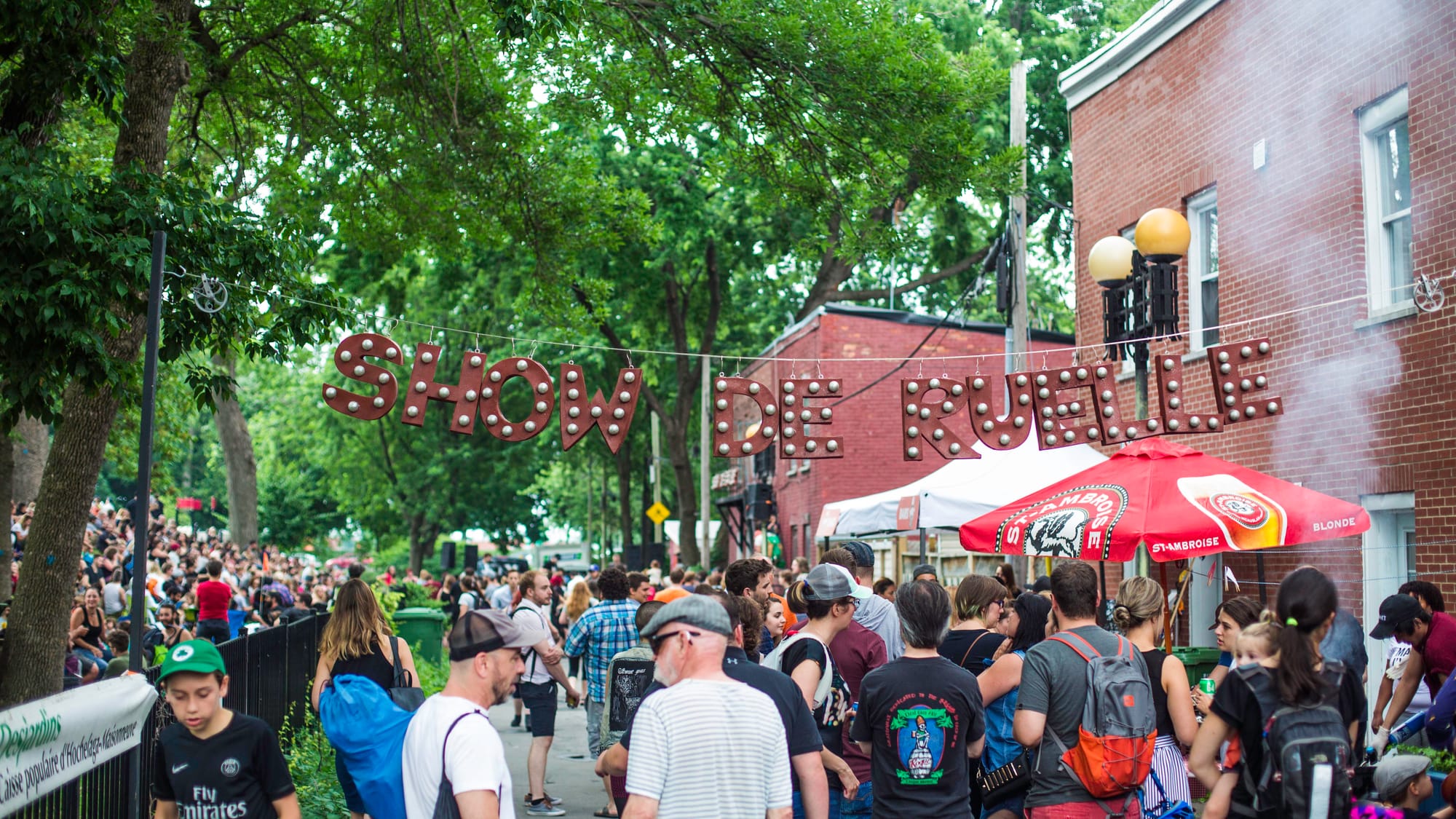
      Shows de ruelle in 2019. | Photograph: Camille Gladu-Drouin

      More than where trash builds up, laundry hangs to dry, or neighbours holler at one another, Montreal’s ruelles vertes represent places where locals have come together to regreen, create, and animate public spaces.
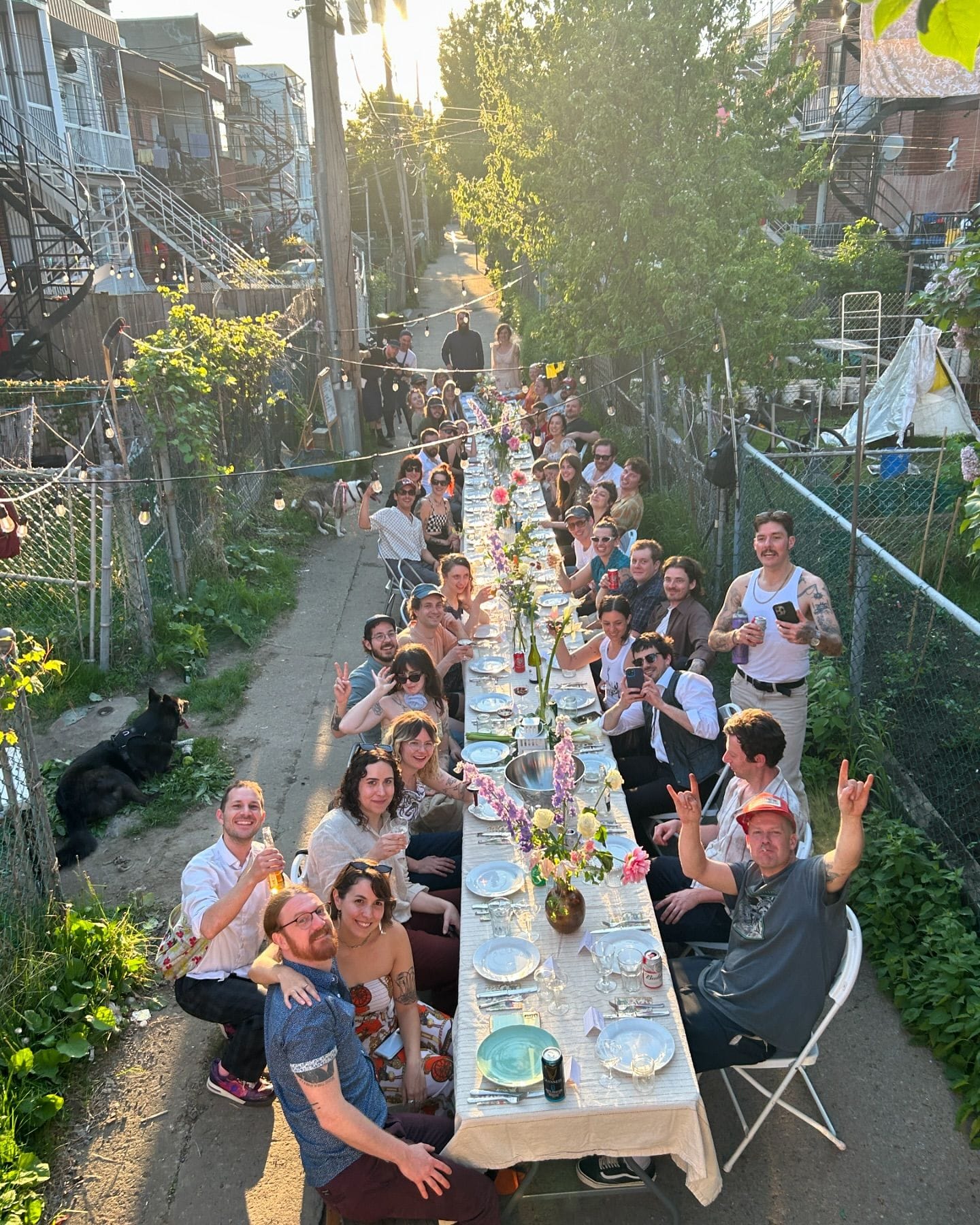
      Photograph: @harrisonfred / Instagram

      They’re often dioramas depicting the character of the neighbourhood they’re in, cabinets of curiosity where their pace of life is collected and on display. They’ll be the site of everything from gardens both wild and communally cultivated to children’s games, block parties, informal music, impromptu dining rooms, and wedding receptions.
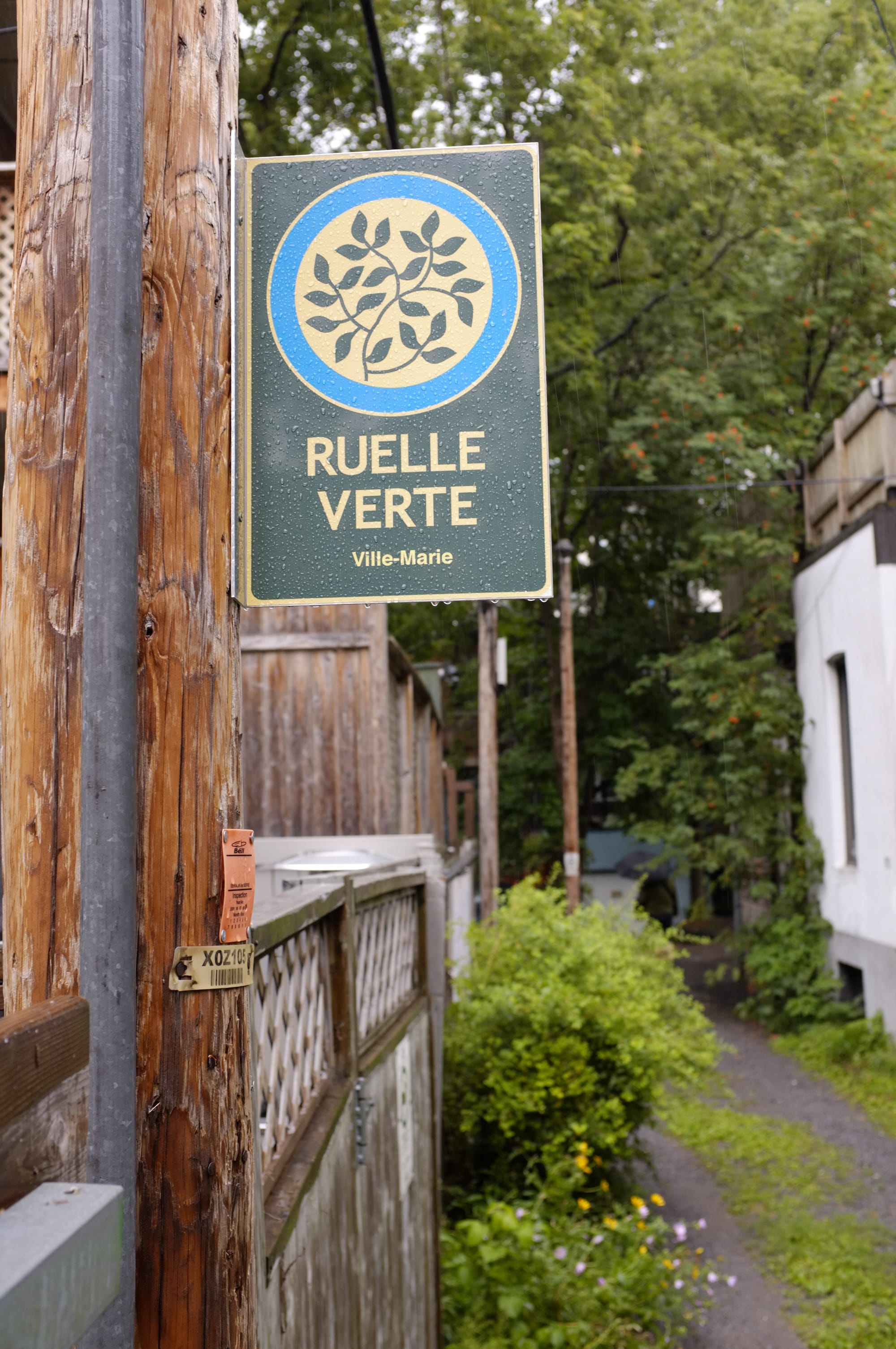
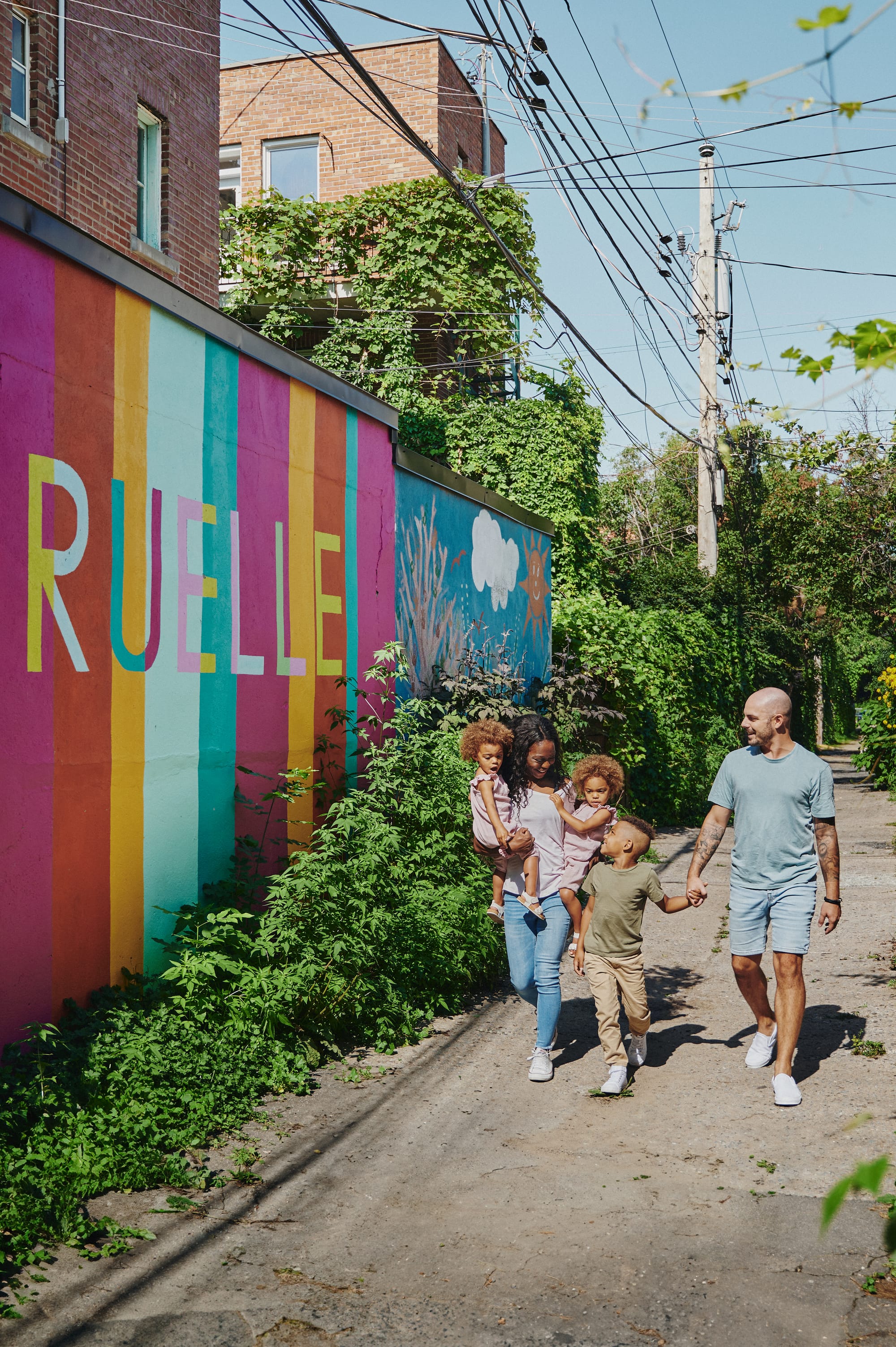
      Photograph: Tourisme Montréal (left) & Daph & Nico - Tourisme Montréal (right)

      If backdoors can symbolize mysterious entrances into the unknown, ruelles vertes are where they’ll lead to in Montreal, and there are over 450 officially designated ones of them to explore.
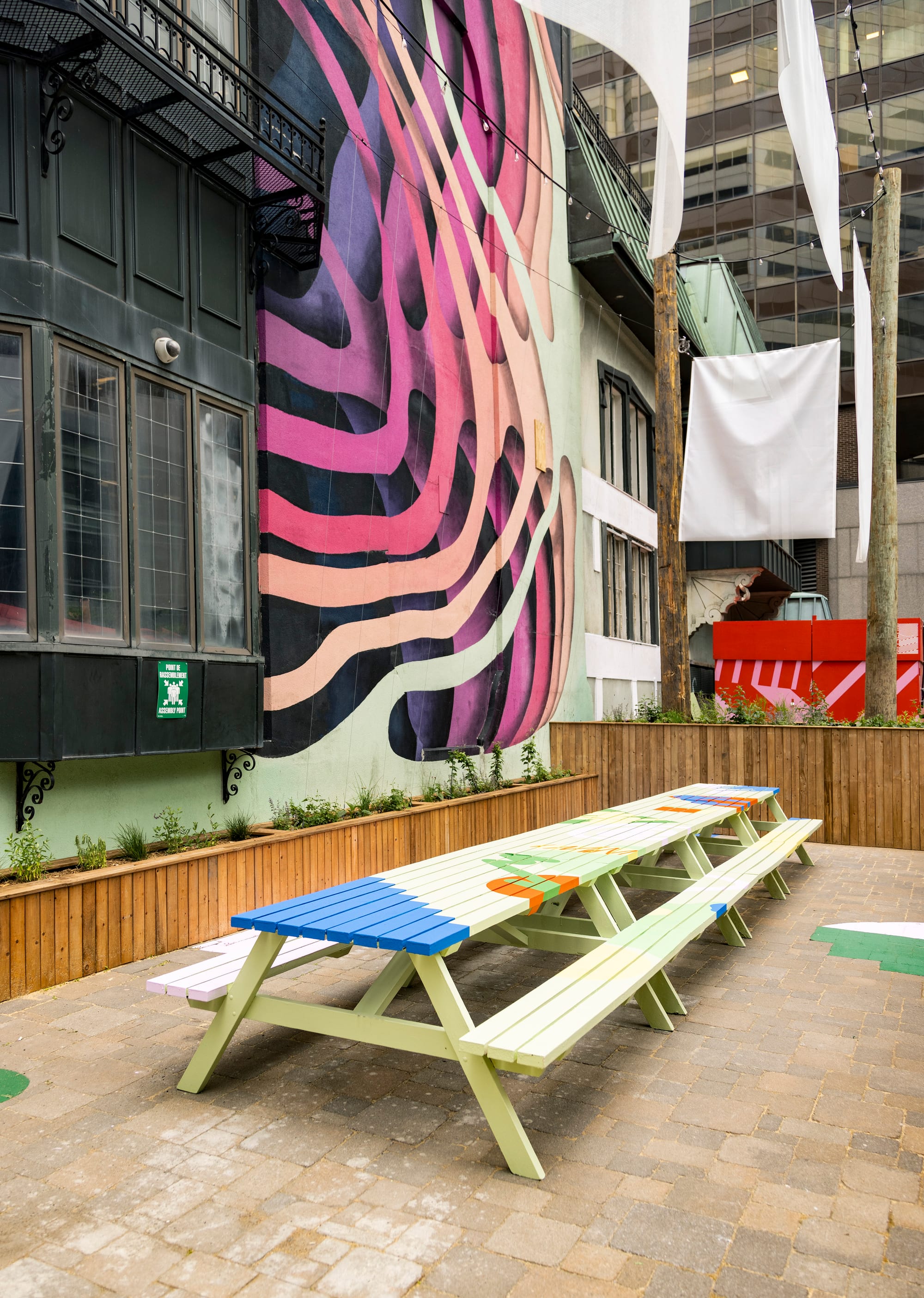
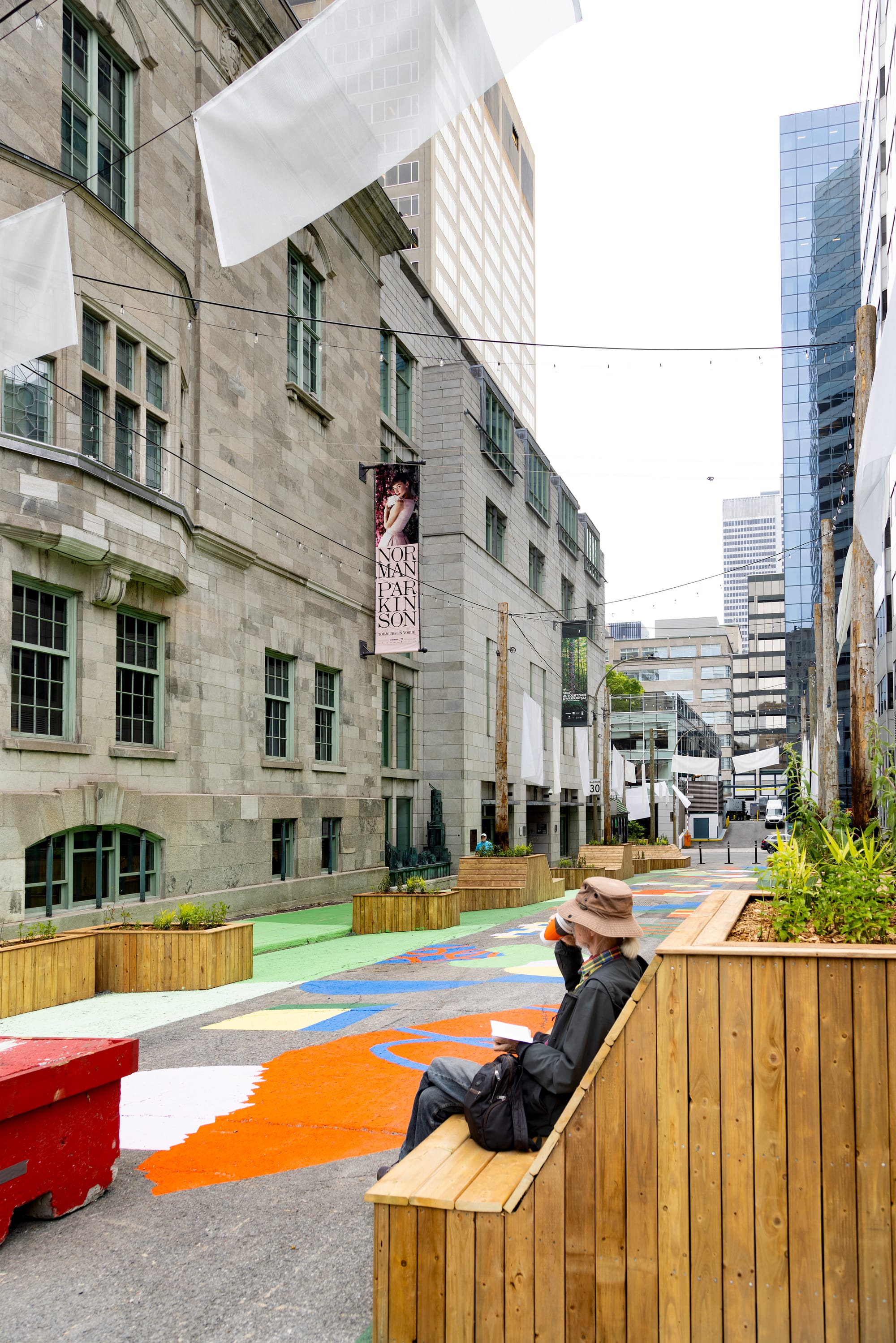
      A long history of green alleyways has inspired seasonal spaces like McCord Stewart Museum’s Museum Alley. | Photograph: Laura Dumitriu

      Unique to the city, they’re not a model to be replicated, but “a source of inspiration for the realization of an ideal,” where it’s less about Montrealers occupying space and more about their caretaking of where they call home.

      The origins of Montreal’s ruelles vertes
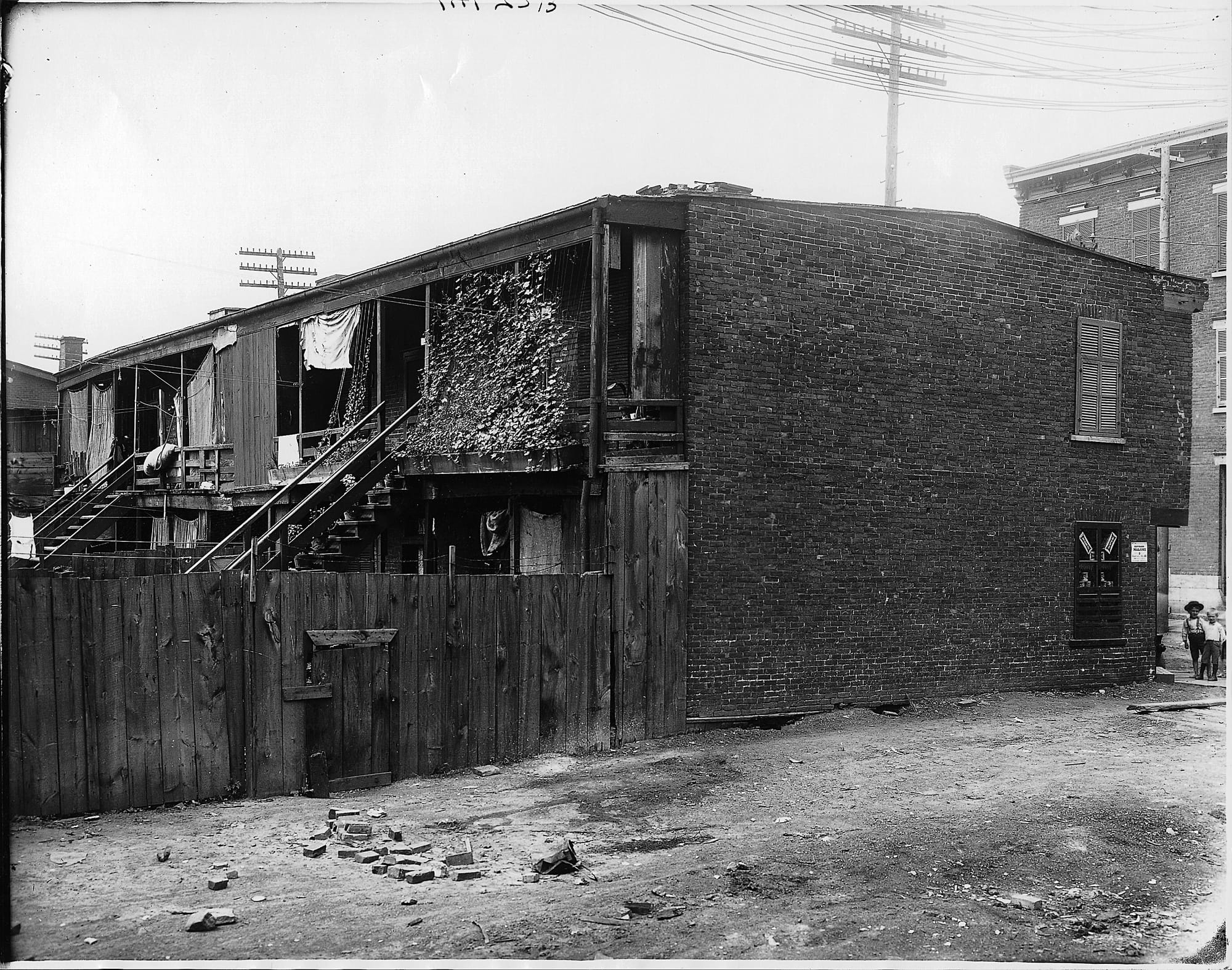
      Rear of Joseph Bastien Grocery, Barré St. corner of Gareau Lane, Montreal, QC, 1903. | Wm. Notman & Son / McCord Stewart Museum
      The Main

      Advertisement

      Latest from The Main

      Arts & CultureAfter 20 Years of Recording Montreal, Breakglass Has a Label to Call Its OwnArts & CultureThe Immigrant Family Who Inherited a NeighbourhoodFood & DrinkThe Drink Is the Last Thing a Great Bar Thinks AboutHistory LessonThe Little Store That Runs Montreal: A Complete History of the DepArts & CultureAngine de Poitrine Is Exactly What the Internet Was Waiting For
      Follow on Google

      Related Classics

      From our archive.

      The Best of Montreal's Festivals, July 2024

      Previous

      The Best of Montreal's Festivals, July 2024

      Next

      Romies: Creating a Contemporary American Bistro with Midcentury Charm

      Romies: Creating a contemporary American bistro with midcentury charm

      Spiraling staircases, a skyline penetrated by steeples, grandfathered neon signs, and relics from Expo 67—the iconography of Montreal is often recognized in the built forms the city amassed throughout history.

      Then there’s where Montrealers live, and how they live there. No matter the neighbourhood, between streets and plex apartments, there’s a rich maze of overgrown pathways to explore in the green alleyways—also referred to as ruelles vertes—the proverbial local backstage to where Montreal’s daily life plays out.

      Shows de ruelle in 2019. | Photograph: Camille Gladu-Drouin

      More than where trash builds up, laundry hangs to dry, or neighbours holler at one another, Montreal’s ruelles vertes represent places where locals have come together to regreen, create, and animate public spaces.

      Photograph: @harrisonfred / Instagram

      They’re often dioramas depicting the character of the neighbourhood they’re in, cabinets of curiosity where their pace of life is collected and on display. They’ll be the site of everything from gardens both wild and communally cultivated to children’s games, block parties, informal music, impromptu dining rooms, and wedding receptions.

      Photograph: Tourisme Montréal (left) & Daph & Nico - Tourisme Montréal (right)

      If backdoors can symbolize mysterious entrances into the unknown, ruelles vertes are where they’ll lead to in Montreal, and there are over 450 officially designated ones of them to explore.

      A long history of green alleyways has inspired seasonal spaces like McCord Stewart Museum’s Museum Alley. | Photograph: Laura Dumitriu

      Unique to the city, they’re not a model to be replicated, but “a source of inspiration for the realization of an ideal,” where it’s less about Montrealers occupying space and more about their caretaking of where they call home.

      The origins of Montreal’s ruelles vertes

      Rear of Joseph Bastien Grocery, Barré St. corner of Gareau Lane, Montreal, QC, 1903. | Wm. Notman & Son / McCord Stewart Museum
      The Main

      Advertisement

      Latest from The Main

      Arts & CultureAfter 20 Years of Recording Montreal, Breakglass Has a Label to Call Its OwnArts & CultureThe Immigrant Family Who Inherited a NeighbourhoodFood & DrinkThe Drink Is the Last Thing a Great Bar Thinks AboutHistory LessonThe Little Store That Runs Montreal: A Complete History of the DepArts & CultureAngine de Poitrine Is Exactly What the Internet Was Waiting For
      Follow on Google

      Related Classics

      From our archive.

      The Best of Montreal's Festivals, July 2024

      Previous

      The Best of Montreal's Festivals, July 2024

      Next

      Romies: Creating a Contemporary American Bistro with Midcentury Charm

      Romies: Creating a contemporary American bistro with midcentury charm

      Spiraling staircases, a skyline penetrated by steeples, grandfathered neon signs, and relics from Expo 67—the iconography of Montreal is often recognized in the built forms the city amassed throughout history.

      Then there’s where Montrealers live, and how they live there. No matter the neighbourhood, between streets and plex apartments, there’s a rich maze of overgrown pathways to explore in the green alleyways—also referred to as ruelles vertes—the proverbial local backstage to where Montreal’s daily life plays out.

      Shows de ruelle in 2019. | Photograph: Camille Gladu-Drouin

      More than where trash builds up, laundry hangs to dry, or neighbours holler at one another, Montreal’s ruelles vertes represent places where locals have come together to regreen, create, and animate public spaces.

      Photograph: @harrisonfred / Instagram

      They’re often dioramas depicting the character of the neighbourhood they’re in, cabinets of curiosity where their pace of life is collected and on display. They’ll be the site of everything from gardens both wild and communally cultivated to children’s games, block parties, informal music, impromptu dining rooms, and wedding receptions.

      Photograph: Tourisme Montréal (left) & Daph & Nico - Tourisme Montréal (right)

      If backdoors can symbolize mysterious entrances into the unknown, ruelles vertes are where they’ll lead to in Montreal, and there are over 450 officially designated ones of them to explore.

      A long history of green alleyways has inspired seasonal spaces like McCord Stewart Museum’s Museum Alley. | Photograph: Laura Dumitriu

      Unique to the city, they’re not a model to be replicated, but “a source of inspiration for the realization of an ideal,” where it’s less about Montrealers occupying space and more about their caretaking of where they call home.

      The origins of Montreal’s ruelles vertes

      Rear of Joseph Bastien Grocery, Barré St. corner of Gareau Lane, Montreal, QC, 1903. | Wm. Notman & Son / McCord Stewart Museum

      Today, the Ruelles Vertes project is a community-led initiative that dates back to the late 1990s, but its history stretches back to the 1800s.

      Le Regroupement des éco-quartiers explains it aptly. As Montreal changed hands from French to British regimes, that included the city’s planners: Before 1850, alleyways were simply small streets that provided access to homes via porte-cochères, or carriage entrances. British urban planning made room for wide, open alleyways with street access.
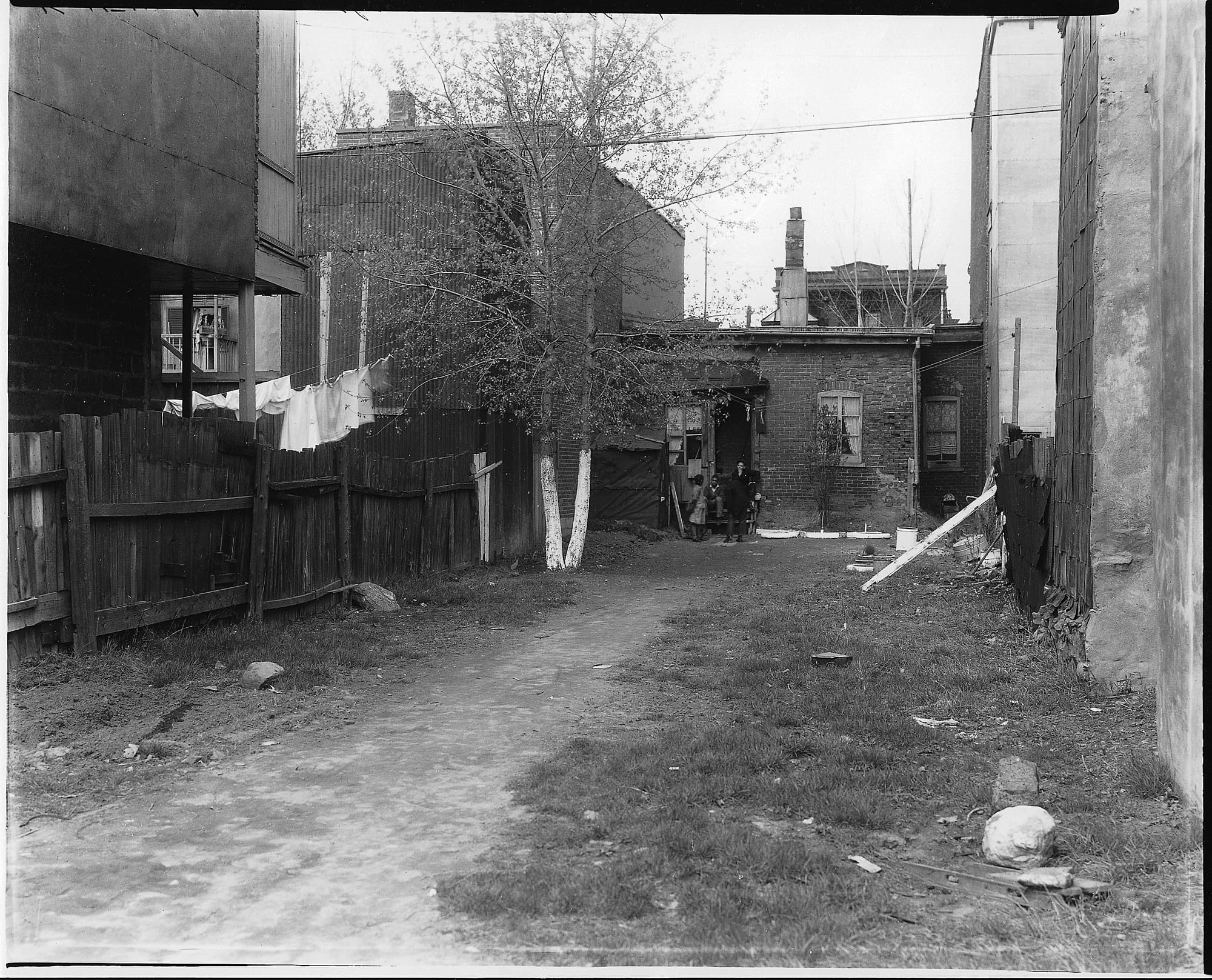
      Backyard with people, Montreal, 1934-35. | Wm. Notman & Son / McCord Stewart Museum

      That’s when Montreal’s back alleys were born.

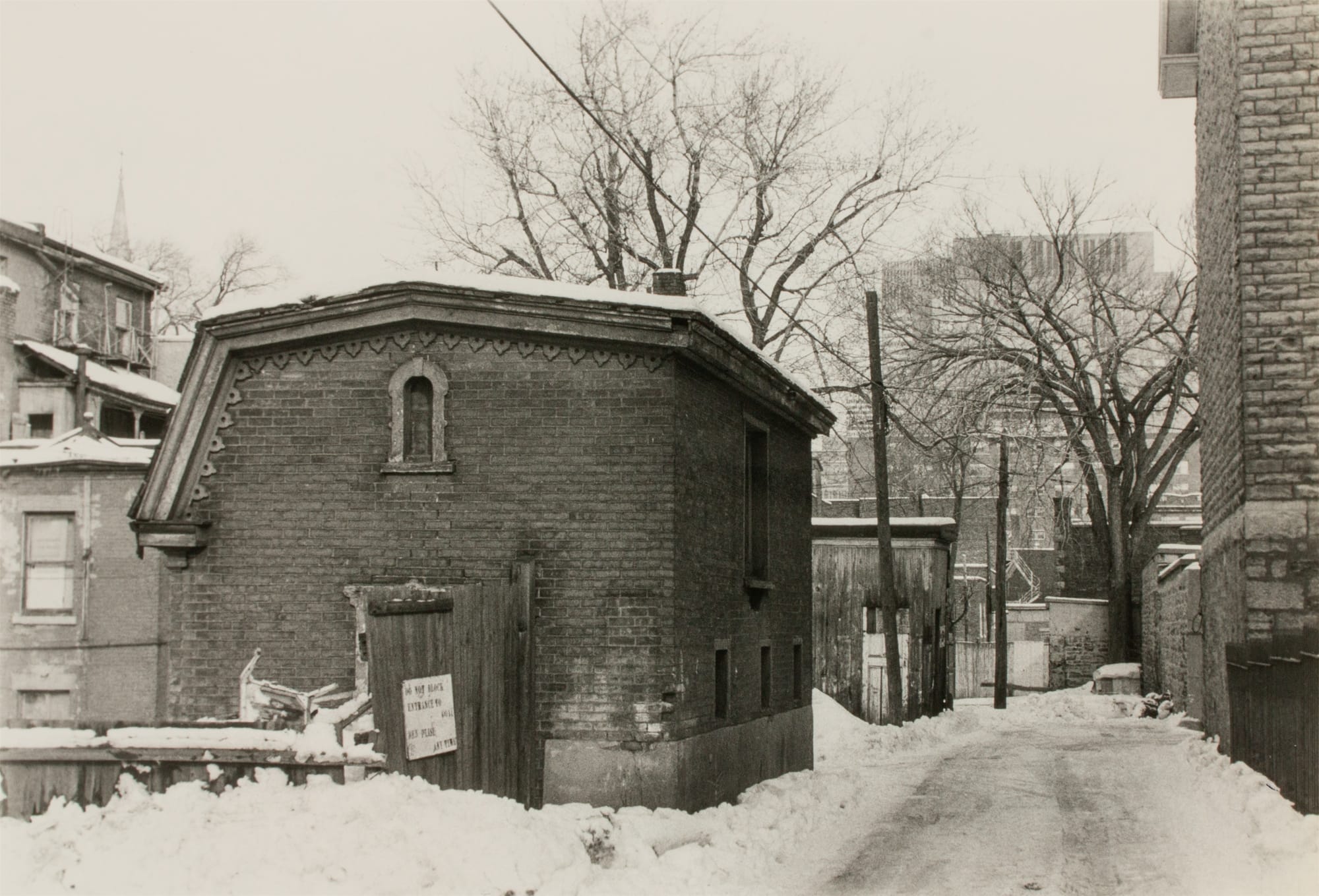
      First acting as either lanes for workers to transport goods like ice and coal or for servants to access homes, which eventually led to them being treated as garbage collection points up until the domination of the car in the 1950s. Alleys were then paved with concrete and asphalt.
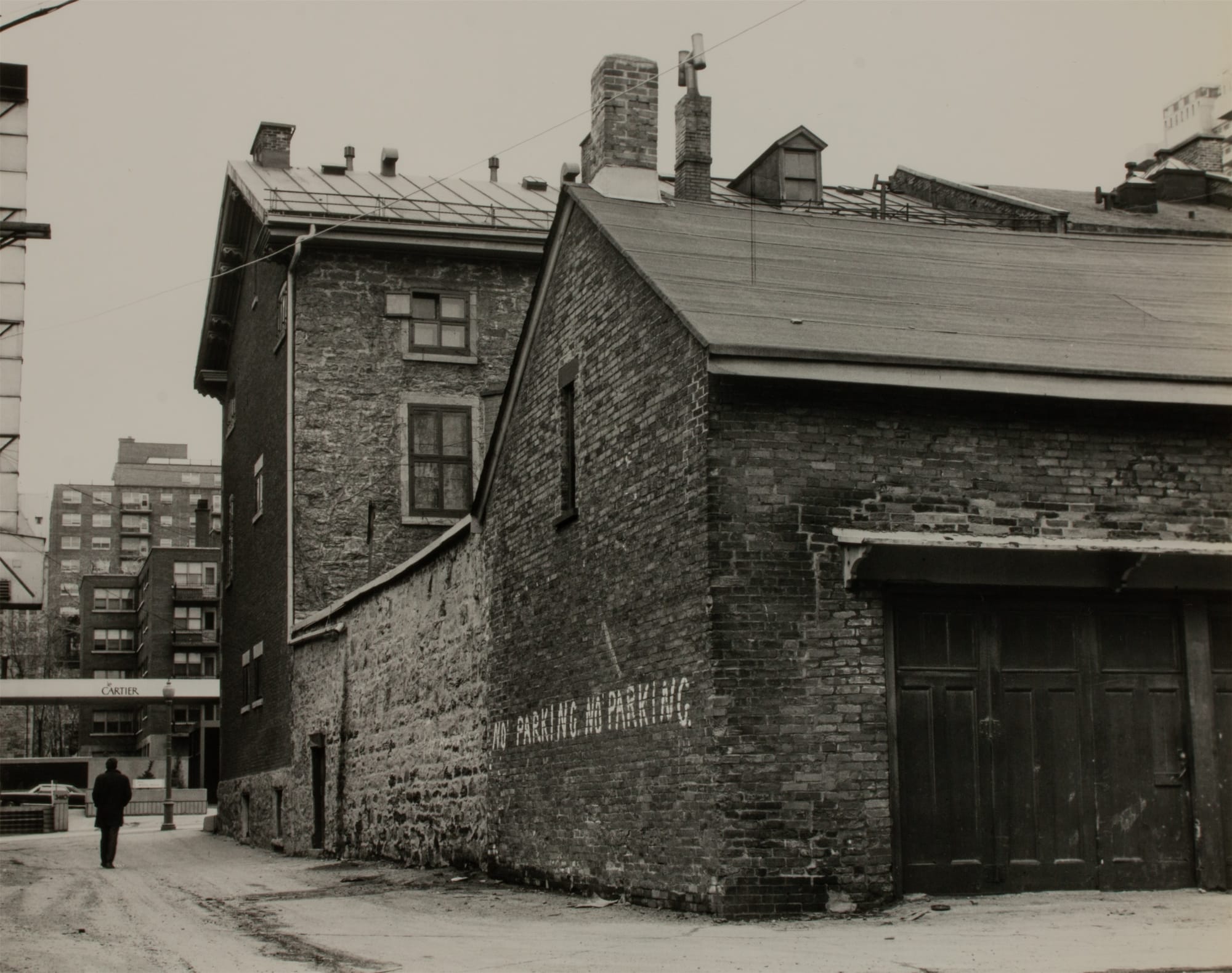
      Lane behind Prince of Wales Terrace, Montreal, Quebec, 1968. | Photograph: Edith H. Mather / McCord Stewart Museum
      Lane behind Dorchester, east of Des Seigneurs, Montreal, Quebec, 1968. | Photograph: Edith H. Mather / McCord Stewart Museum

      It was only during Mayor Jean Drapeau’s administration in the 1980s that alleyways began to see the development of parks. Two projects, Operation Tournesol and Place au Soleil, allowed the demolition of backyard sheds and the transformation of the alleys. Until the program was abandoned in 1988, 58 alleys were developed.
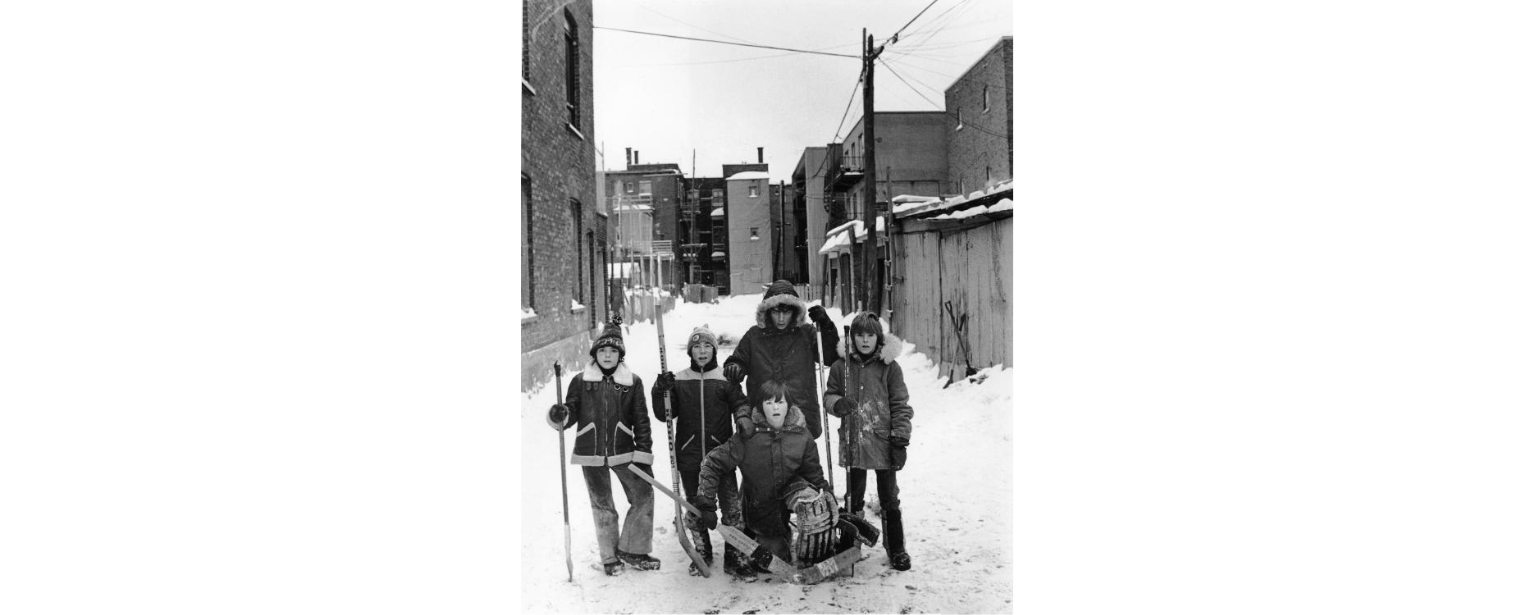
      Street hockey team in an alley, Montreal, QC, about 1984. | Photograph: John Taylor / McCord Stewart Museum

      That laid the groundwork for Montreal’s first true ruelle verte in 1995, found between Napoleon, Roy, and Mentana Streets and Parc-La Fontaine Avenue in the Plateau-Mont-Royal borough. It’s still there to this day.
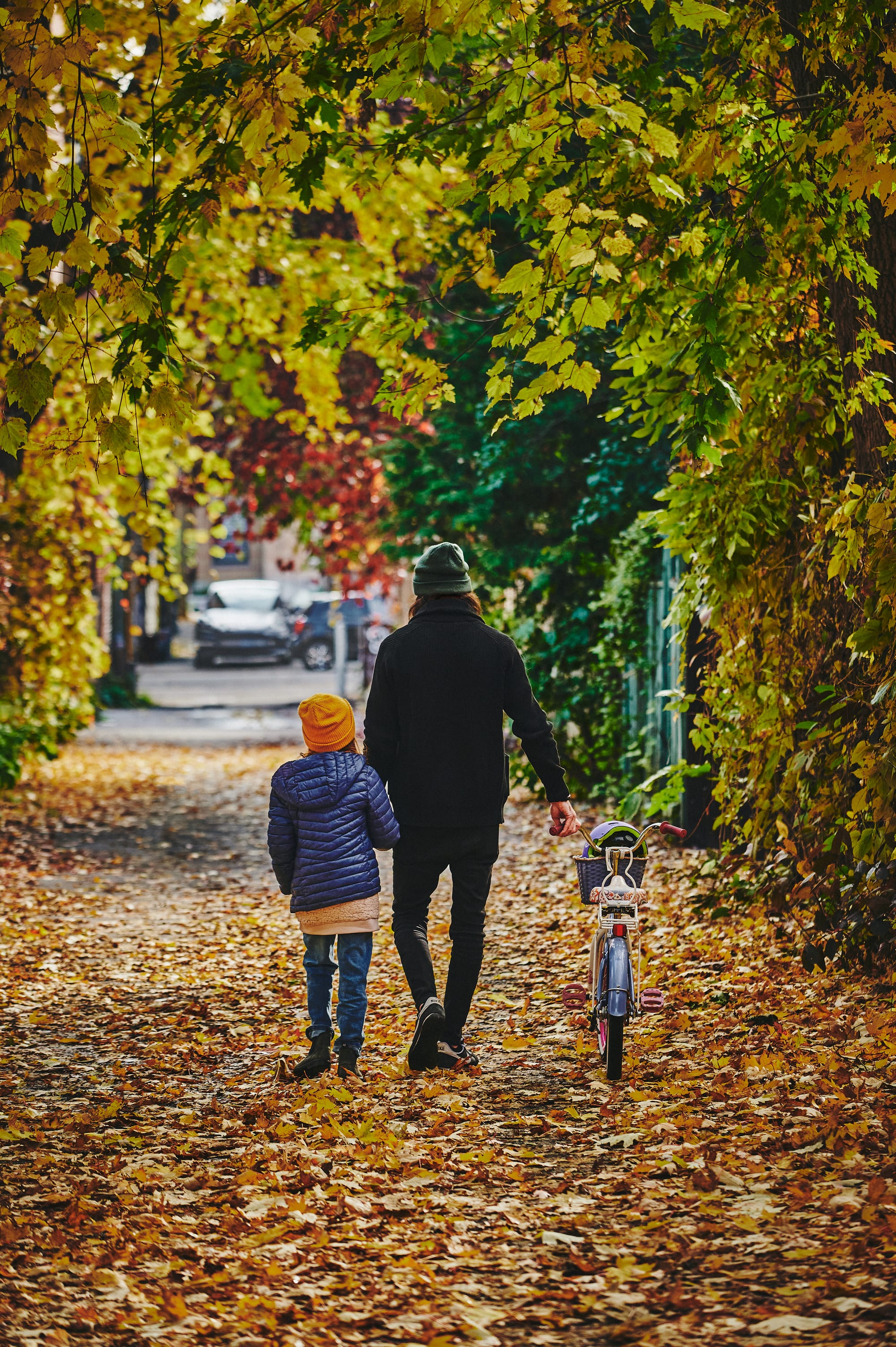
      Photograph: Daph & Nico - Tourisme Montréal
      Montreal’s ruelles vertes serve as a case study of the benefits of equitable and sustainable green infrastructure in cities, whether it’s how they revive access to nature, create perennially pedestrian space, or enhance a sense of interconnection and belonging among locals.

      What makes a ruelle verte in Montreal

      Since those early developments, éco-quartiers now serve 80% of Montreal’s population, supporting residents across Montreal as they’ve mobilized to beautify alleys and establish ruelles vertes in nearly every single one of the city’s 19 boroughs. 
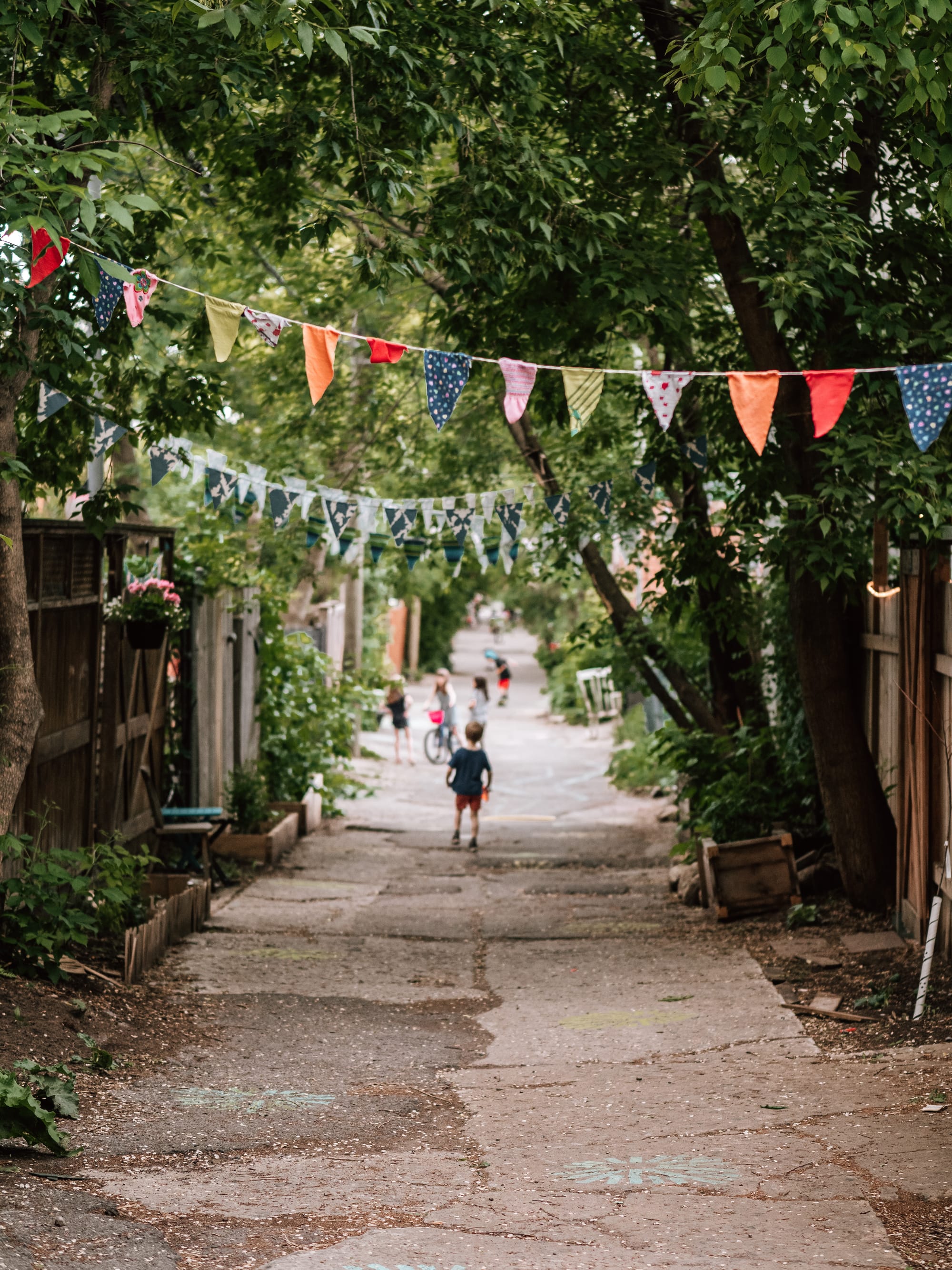
      Photograph: Laurène Tinel - Tourisme Montréal

      With community groups pushing for official designation, the city started funding the effort in 1997. Typically granting $10,000 to $20,000 per block, ruelles vertes follow an established design guide to meet specific criteria: Creating free and open areas that increase biodiversity with green and blue corridors full of nature, promoting social connections for safety and belonging and resource-sharing between residents—think anything from a cup of sugar to power tools—and slowing down traffic instead of more pedestrian space.
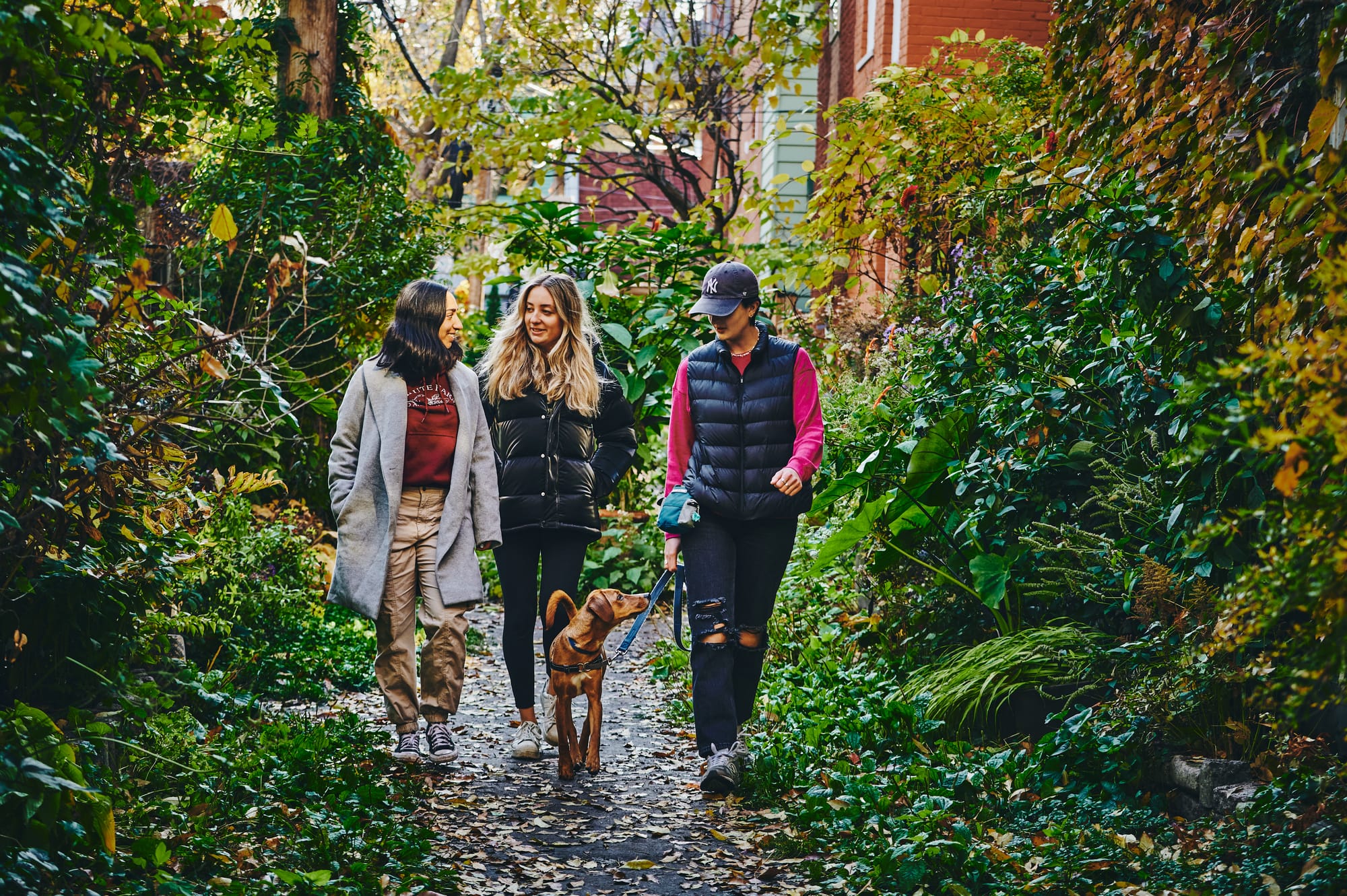
      Photograph: Daph & Nico - Tourisme Montréal

      Adapting to the socio-demographics and landscape architecture of backyards in their locations, alleys take on (but aren’t necessarily limited to) four different ‘colours’ and forms:

      • Green alleys for sustainable development projects on a human scale that are led by a citizens' committee, supervised and supported by a local program, and—in some cases—in collaboration with an eco-district.
      • White alleys for snow management and different components like four-season cabins, entertainment spaces, and equipment for winter games; essentially space for winter activities.
      • Blue-green alleys aimed at retaining rainwater collected by flat roofs in rain gardens and retention pits.
      • Active alleys promoting a mix of uses, from the promotion of socialization and healthy lifestyle habits to ecological elements.
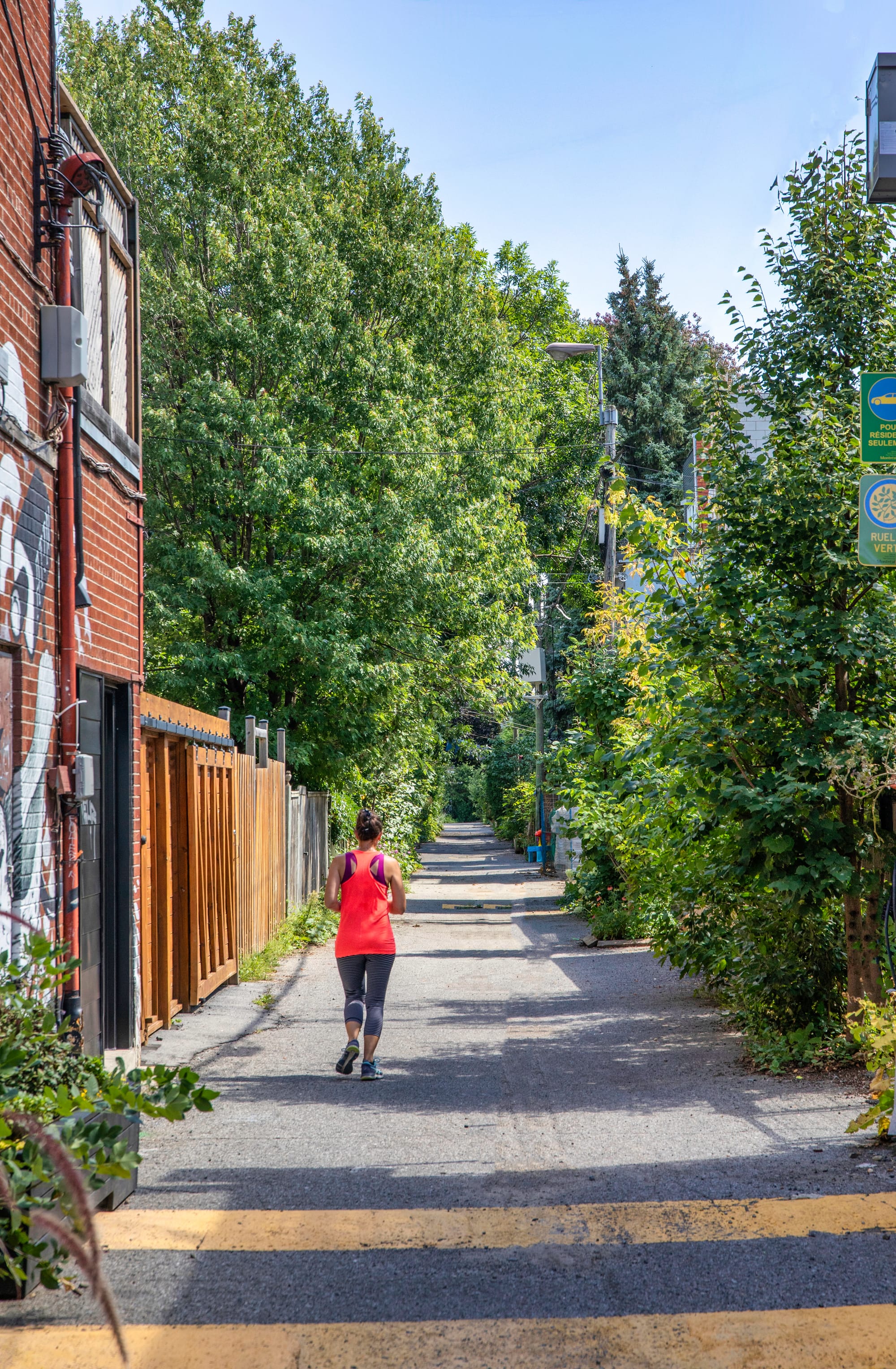
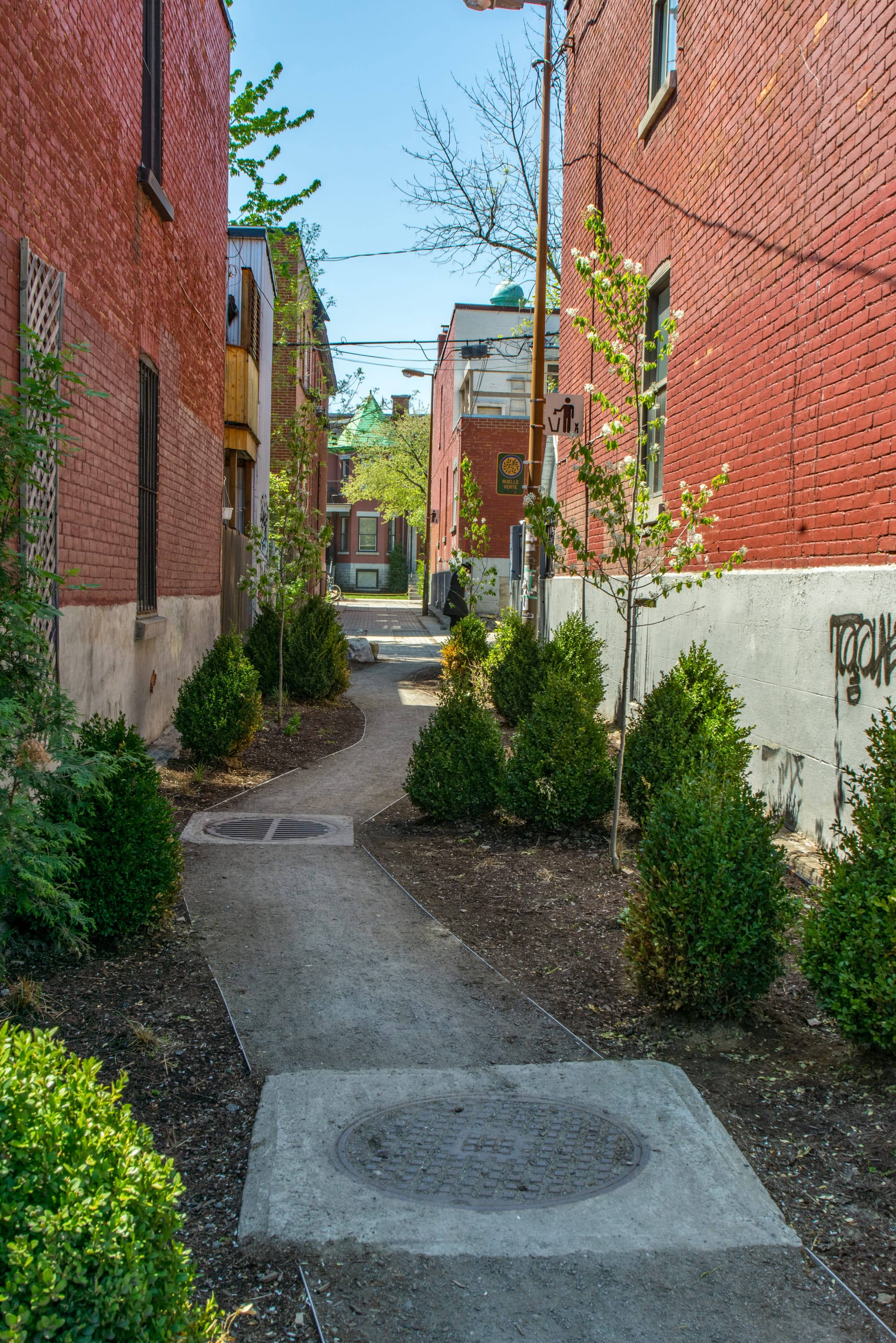
      Photograph: Alexandre Choquette - Tourisme Montréal (left) & Paul Shio (right)

      A source of inspiration, the realization of an ideal

      Montreal’s ruelles vertes serve as a case study of the benefits of equitable and sustainable green infrastructure in cities, whether it’s how they revive access to nature, create perennially pedestrian space, or enhance a sense of interconnection and belonging among locals.
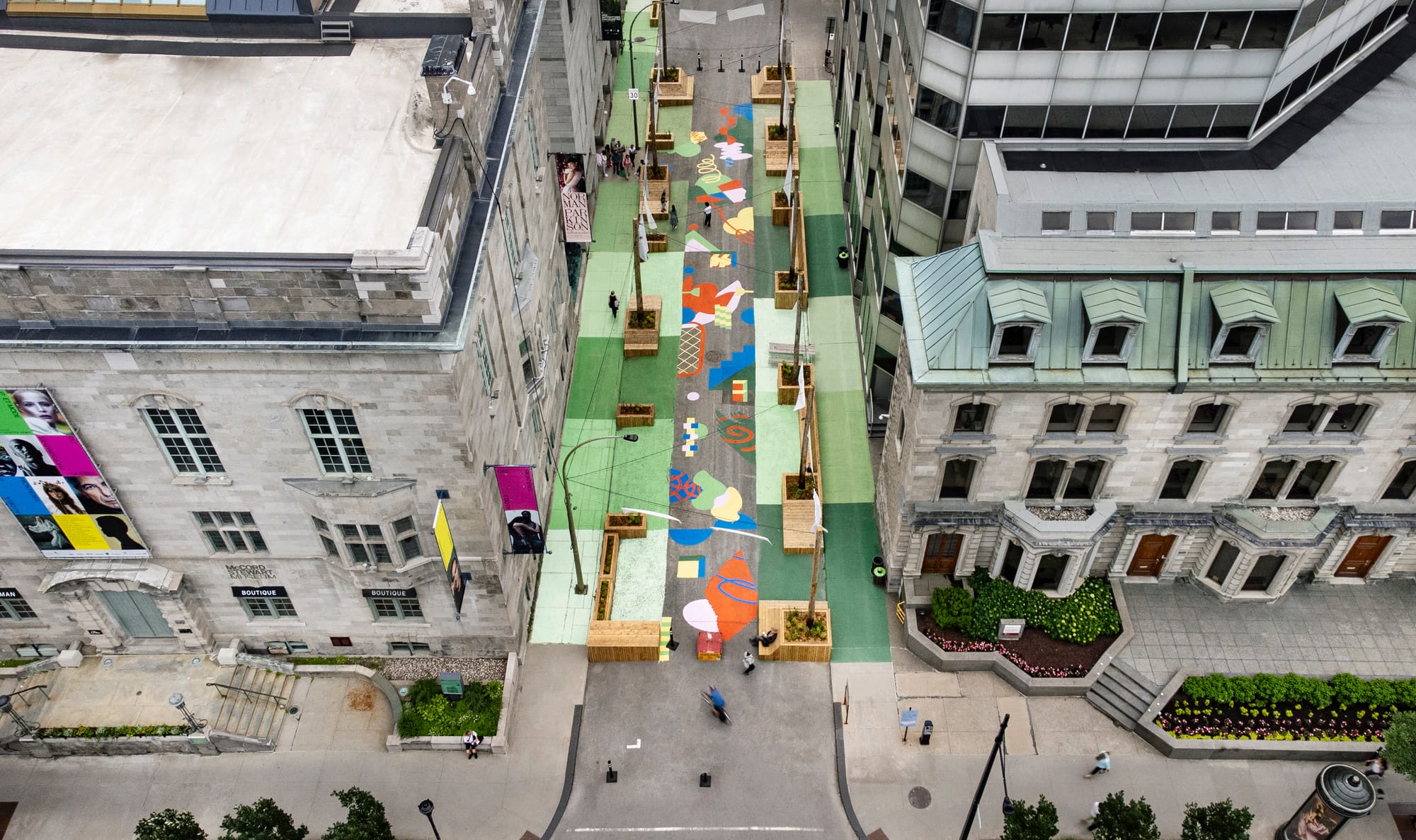
      McCord Stewart Museum’s Museum Alley. | Photograph: Laura Dumitriu

      Unique to the city, they’re not a model to be replicated, but “a source of inspiration for the realization of an ideal,” where it’s less about Montrealers occupying space and more about their caretaking of where they call home. Though primarily used by their residents, they aren’t gated communities; they’re open theatres looking into the public lives of Montrealers.

      Revealing a rich and inspirational history in Montreal that stands out among any other city in North America, the city’s ruelles vertes are a phenomenon whose evolution has inspired new contemporary and artistic creations. 
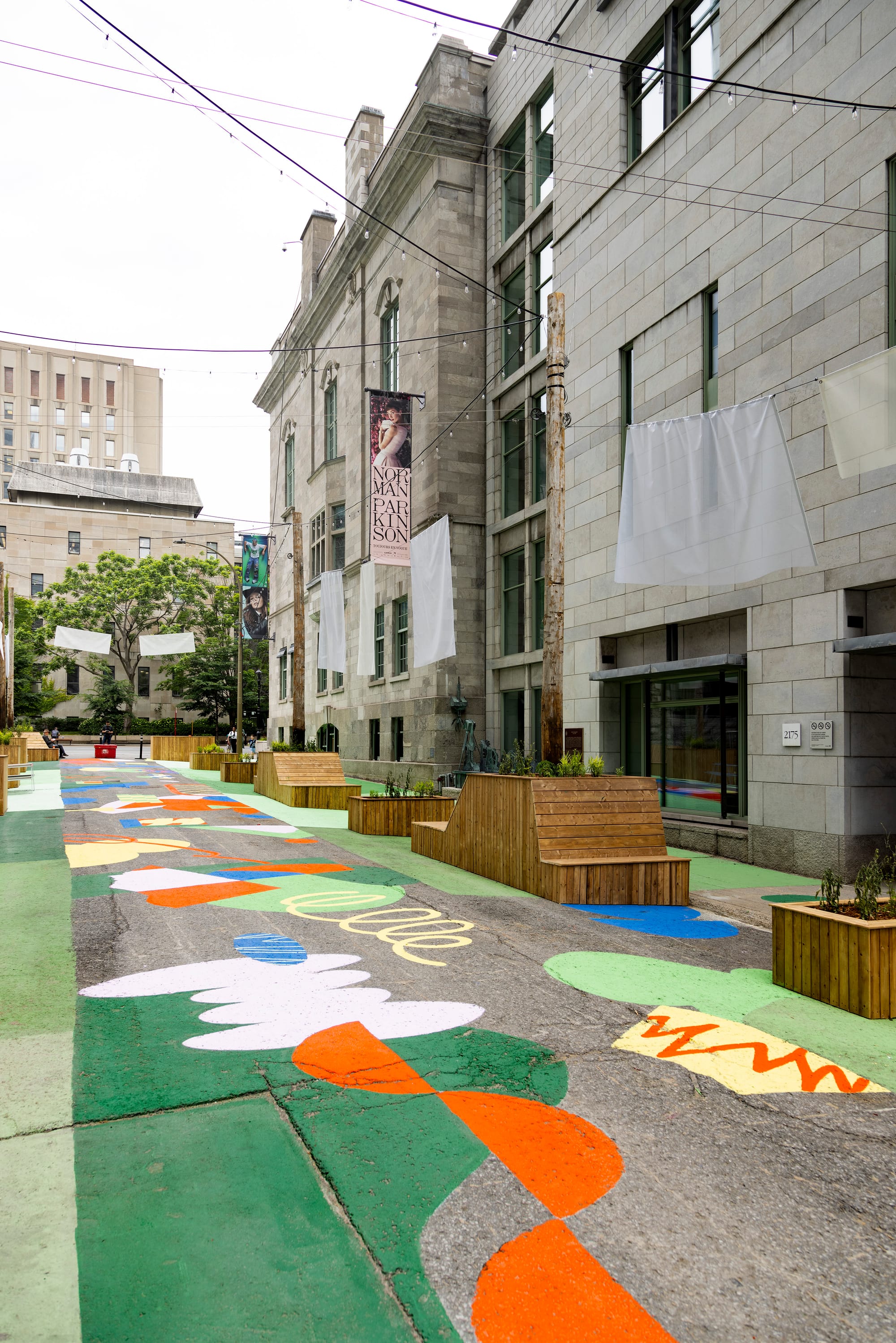
      McCord Stewart Museum’s Museum Alley. | Photograph: Laura Dumitriu

      The most notable of these is found in spaces like the McCord Stewart Museum’s Museum Alley, a downtown core experience that transforms its adjacent Victoria Street into a space of abundant greenery and installations that shift annually that evolve with the season.

      The newest edition features everything from free weekly musical programming reflecting different facets of Montreal’s culture to alley games and a street mural created by Olivier Charland for MURAL.

      McCord Stewart Museum’s Museum Alley. | Photograph: Laura Dumitriu

      Learn more about McCord Stewart Museum, its seasonal Museum Alley space, and discover its weekly Musical Wednesdays programming.

      Go further behind the scenes.

      Subscribe to our newsletter for a weekly dose of news and events.

      SUBSCRIBE

      Spiraling staircases, a skyline penetrated by steeples, grandfathered neon signs, and relics from Expo 67—the iconography of Montreal is often recognized in the built forms the city amassed throughout history.

      Then there’s where Montrealers live, and how they live there. No matter the neighbourhood, between streets and plex apartments, there’s a rich maze of overgrown pathways to explore in the green alleyways—also referred to as ruelles vertes—the proverbial local backstage to where Montreal’s daily life plays out.

      Shows de ruelle in 2019. | Photograph: Camille Gladu-Drouin

      More than where trash builds up, laundry hangs to dry, or neighbours holler at one another, Montreal’s ruelles vertes represent places where locals have come together to regreen, create, and animate public spaces.

      Photograph: @harrisonfred / Instagram

      They’re often dioramas depicting the character of the neighbourhood they’re in, cabinets of curiosity where their pace of life is collected and on display. They’ll be the site of everything from gardens both wild and communally cultivated to children’s games, block parties, informal music, impromptu dining rooms, and wedding receptions.

      Photograph: Tourisme Montréal (left) & Daph & Nico - Tourisme Montréal (right)

      If backdoors can symbolize mysterious entrances into the unknown, ruelles vertes are where they’ll lead to in Montreal, and there are over 450 officially designated ones of them to explore.

      A long history of green alleyways has inspired seasonal spaces like McCord Stewart Museum’s Museum Alley. | Photograph: Laura Dumitriu

      Unique to the city, they’re not a model to be replicated, but “a source of inspiration for the realization of an ideal,” where it’s less about Montrealers occupying space and more about their caretaking of where they call home.

      The origins of Montreal’s ruelles vertes

      Rear of Joseph Bastien Grocery, Barré St. corner of Gareau Lane, Montreal, QC, 1903. | Wm. Notman & Son / McCord Stewart Museum

      Today, the Ruelles Vertes project is a community-led initiative that dates back to the late 1990s, but its history stretches back to the 1800s.

      Le Regroupement des éco-quartiers explains it aptly. As Montreal changed hands from French to British regimes, that included the city’s planners: Before 1850, alleyways were simply small streets that provided access to homes via porte-cochères, or carriage entrances. British urban planning made room for wide, open alleyways with street access.

      Backyard with people, Montreal, 1934-35. | Wm. Notman & Son / McCord Stewart Museum

      That’s when Montreal’s back alleys were born.

      First acting as either lanes for workers to transport goods like ice and coal or for servants to access homes, which eventually led to them being treated as garbage collection points up until the domination of the car in the 1950s. Alleys were then paved with concrete and asphalt.

      Lane behind Prince of Wales Terrace, Montreal, Quebec, 1968. | Photograph: Edith H. Mather / McCord Stewart Museum
      Lane behind Dorchester, east of Des Seigneurs, Montreal, Quebec, 1968. | Photograph: Edith H. Mather / McCord Stewart Museum

      It was only during Mayor Jean Drapeau’s administration in the 1980s that alleyways began to see the development of parks. Two projects, Operation Tournesol and Place au Soleil, allowed the demolition of backyard sheds and the transformation of the alleys. Until the program was abandoned in 1988, 58 alleys were developed.

      Street hockey team in an alley, Montreal, QC, about 1984. | Photograph: John Taylor / McCord Stewart Museum

      That laid the groundwork for Montreal’s first true ruelle verte in 1995, found between Napoleon, Roy, and Mentana Streets and Parc-La Fontaine Avenue in the Plateau-Mont-Royal borough. It’s still there to this day.

      Photograph: Daph & Nico - Tourisme Montréal
      Montreal’s ruelles vertes serve as a case study of the benefits of equitable and sustainable green infrastructure in cities, whether it’s how they revive access to nature, create perennially pedestrian space, or enhance a sense of interconnection and belonging among locals.

      What makes a ruelle verte in Montreal

      Since those early developments, éco-quartiers now serve 80% of Montreal’s population, supporting residents across Montreal as they’ve mobilized to beautify alleys and establish ruelles vertes in nearly every single one of the city’s 19 boroughs. 

      Photograph: Laurène Tinel - Tourisme Montréal

      With community groups pushing for official designation, the city started funding the effort in 1997. Typically granting $10,000 to $20,000 per block, ruelles vertes follow an established design guide to meet specific criteria: Creating free and open areas that increase biodiversity with green and blue corridors full of nature, promoting social connections for safety and belonging and resource-sharing between residents—think anything from a cup of sugar to power tools—and slowing down traffic instead of more pedestrian space.

      Photograph: Daph & Nico - Tourisme Montréal

      Adapting to the socio-demographics and landscape architecture of backyards in their locations, alleys take on (but aren’t necessarily limited to) four different ‘colours’ and forms:

      • Green alleys for sustainable development projects on a human scale that are led by a citizens' committee, supervised and supported by a local program, and—in some cases—in collaboration with an eco-district.
      • White alleys for snow management and different components like four-season cabins, entertainment spaces, and equipment for winter games; essentially space for winter activities.
      • Blue-green alleys aimed at retaining rainwater collected by flat roofs in rain gardens and retention pits.
      • Active alleys promoting a mix of uses, from the promotion of socialization and healthy lifestyle habits to ecological elements.

      Photograph: Alexandre Choquette - Tourisme Montréal (left) & Paul Shio (right)

      A source of inspiration, the realization of an ideal

      Montreal’s ruelles vertes serve as a case study of the benefits of equitable and sustainable green infrastructure in cities, whether it’s how they revive access to nature, create perennially pedestrian space, or enhance a sense of interconnection and belonging among locals.

      McCord Stewart Museum’s Museum Alley. | Photograph: Laura Dumitriu

      Unique to the city, they’re not a model to be replicated, but “a source of inspiration for the realization of an ideal,” where it’s less about Montrealers occupying space and more about their caretaking of where they call home. Though primarily used by their residents, they aren’t gated communities; they’re open theatres looking into the public lives of Montrealers.

      Revealing a rich and inspirational history in Montreal that stands out among any other city in North America, the city’s ruelles vertes are a phenomenon whose evolution has inspired new contemporary and artistic creations. 
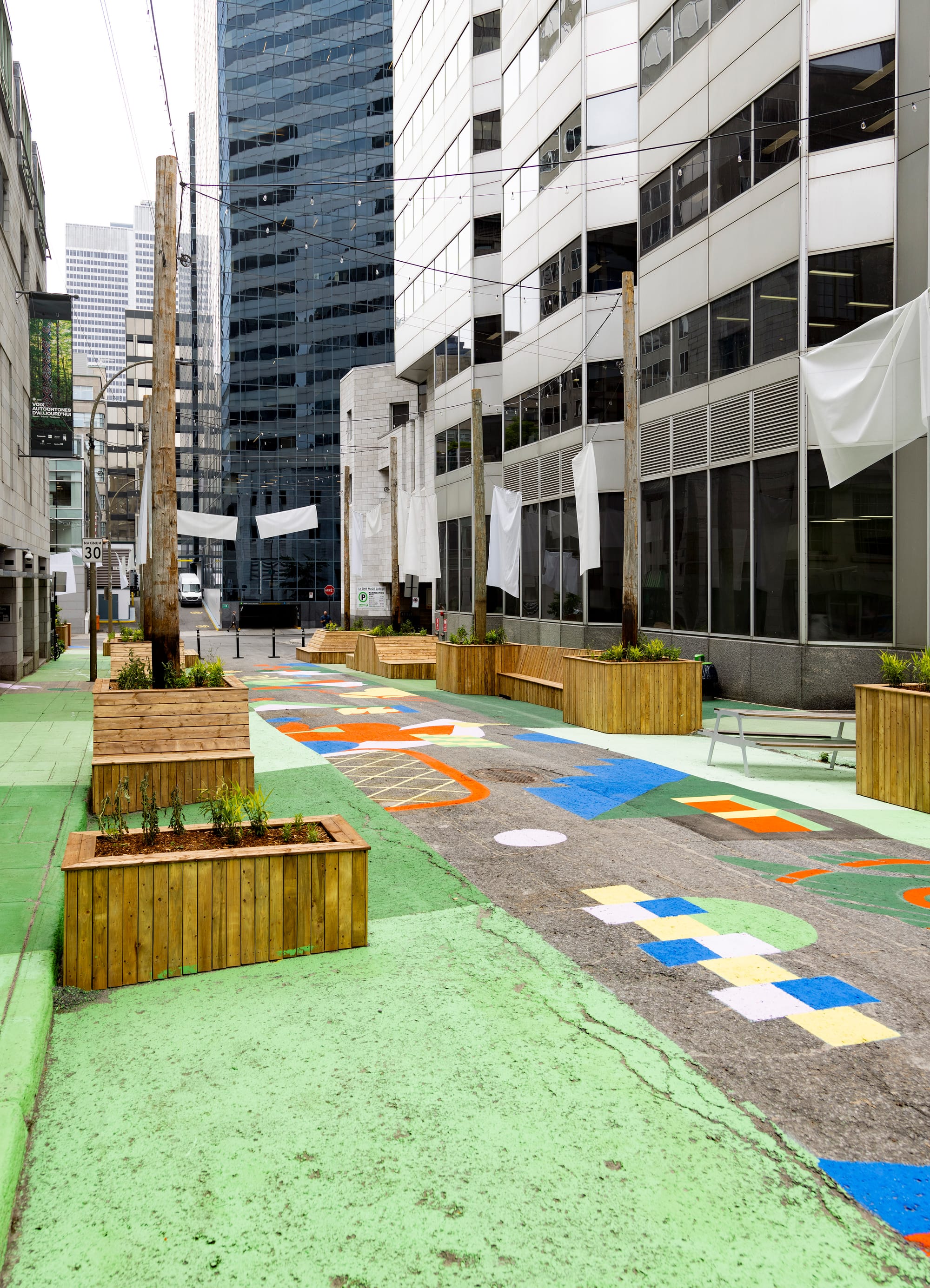
      McCord Stewart Museum’s Museum Alley. | Photograph: Laura Dumitriu

      The most notable of these is found in spaces like the McCord Stewart Museum’s Museum Alley, a downtown core experience that transforms its adjacent Victoria Street into a space of abundant greenery and installations that shift annually that evolve with the season.

      The newest edition features everything from free weekly musical programming reflecting different facets of Montreal’s culture to alley games and a street mural created by Olivier Charland for MURAL.
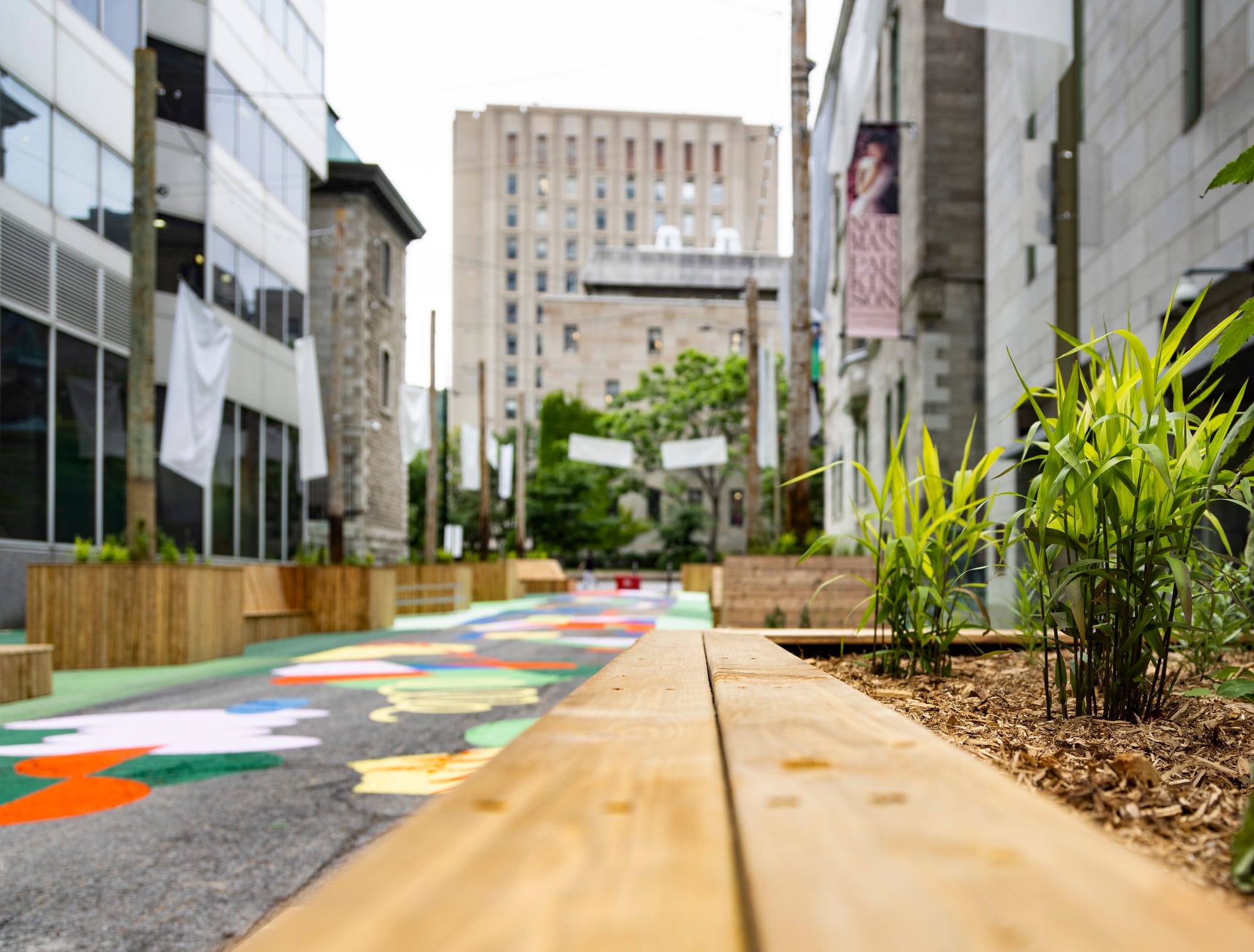
      McCord Stewart Museum’s Museum Alley. | Photograph: Laura Dumitriu

      Learn more about McCord Stewart Museum, its seasonal Museum Alley space, and discover its weekly Musical Wednesdays programming.
      Go further behind the scenes.

      Subscribe to our newsletter for a weekly dose of news and events.

      SUBSCRIBE