


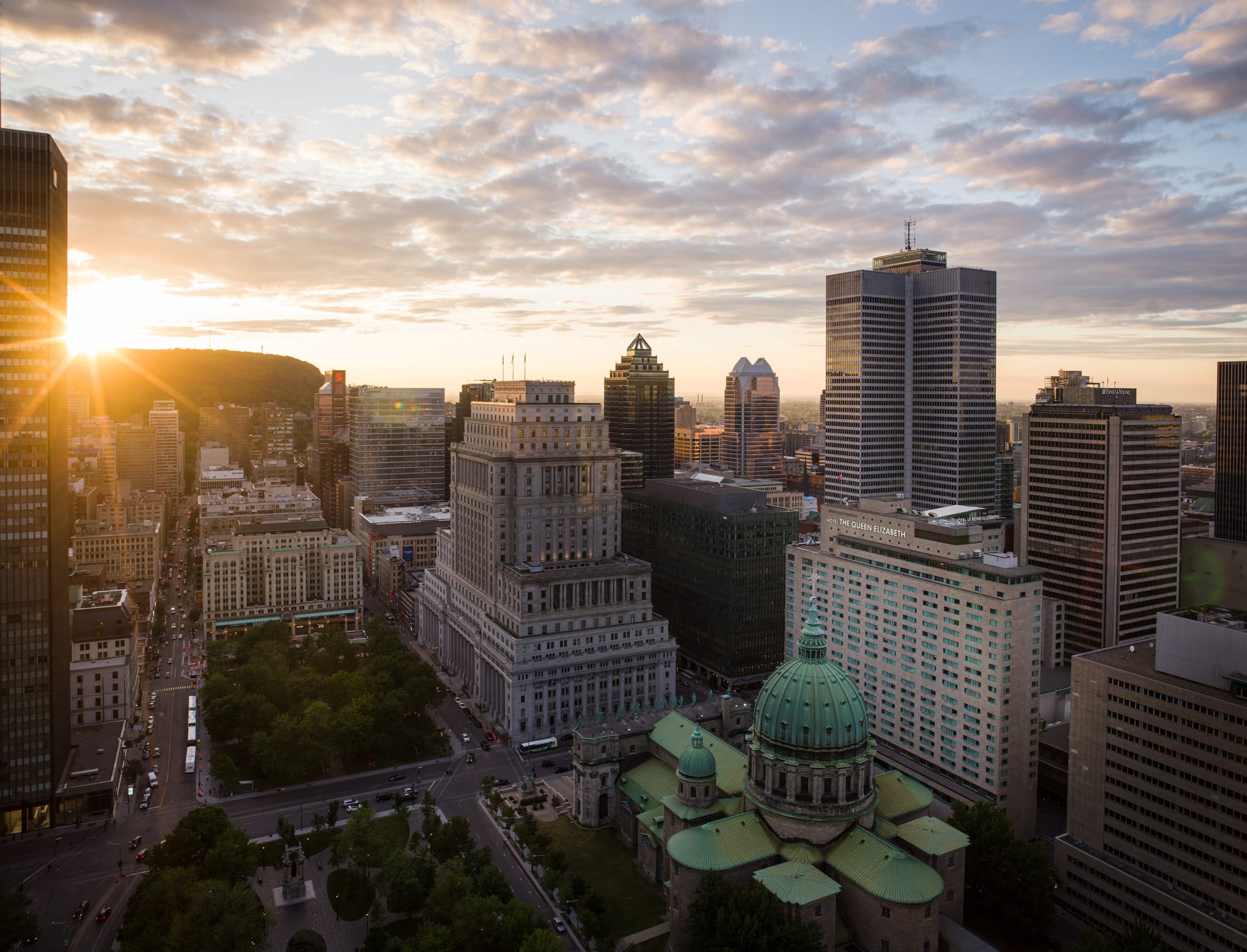
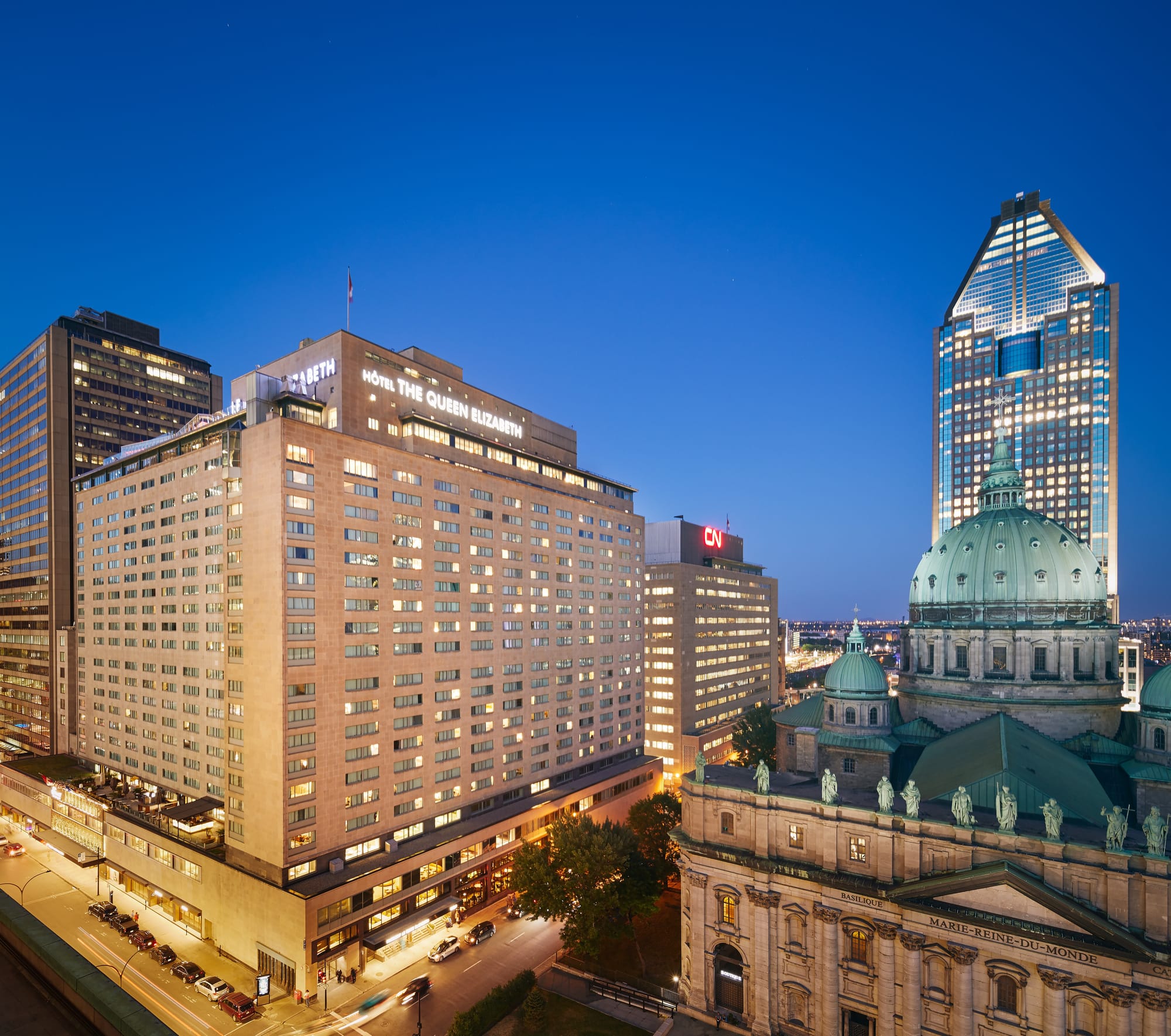
When Fairmont The Queen Elizabeth softly opened on March 15, 1958, ahead of a splashier three-day gala the following April, it did so above a train station. The location’s a perfect metaphor for what this luxury hotel was always meant to be: a place in constant motion, connected to everything.
Built by the Canadian National Railway directly over Central Station, the 21-storey tower required 160 concrete pylons just to muffle the rumble of trains passing beneath it. At the time, the hotel was a marvel of hospitality engineering, numbering among the first hotels in North America to offer escalators, centralized air conditioning, and a direct-dial telephone in every room. Within three years of opening, it became the first property connected to what would grow into Montreal's Underground City, via an underground corridor linking it to Place Ville Marie.
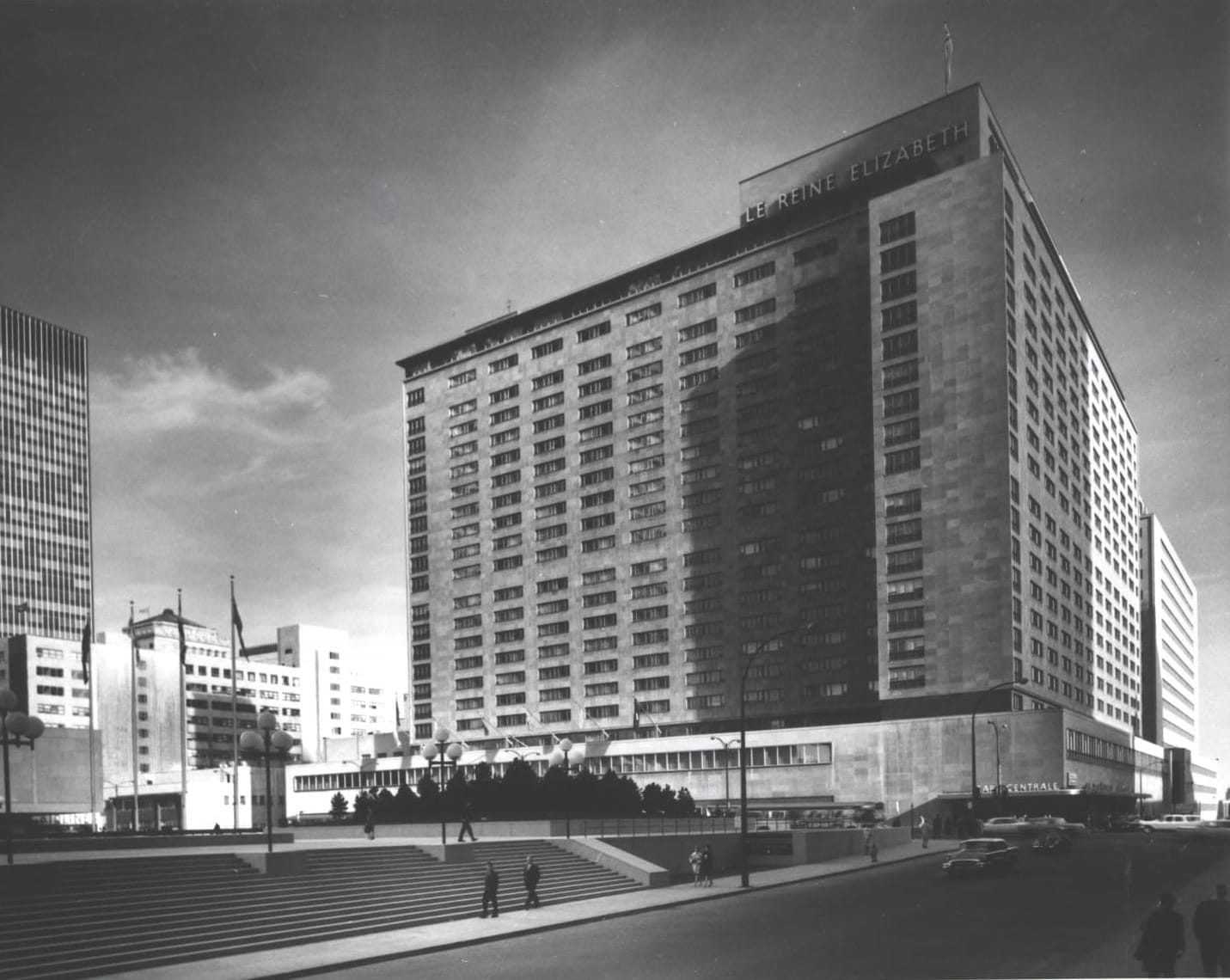
Fairmont The Queen Elizabeth in 1958.
Born among controversy
Even before the first guests checked in, the "Queen E" was already part of Montreal’s civic conversation. CN president Donald Gordon’s decision to name the hotel after Elizabeth II sparked passionate debate among Québécois nationalists who wanted it called Château Maisonneuve in honour of Montreal’s founder, Paul de Chomedey, a reflection of how deeply this building already mattered before it had welcomed a single guest.
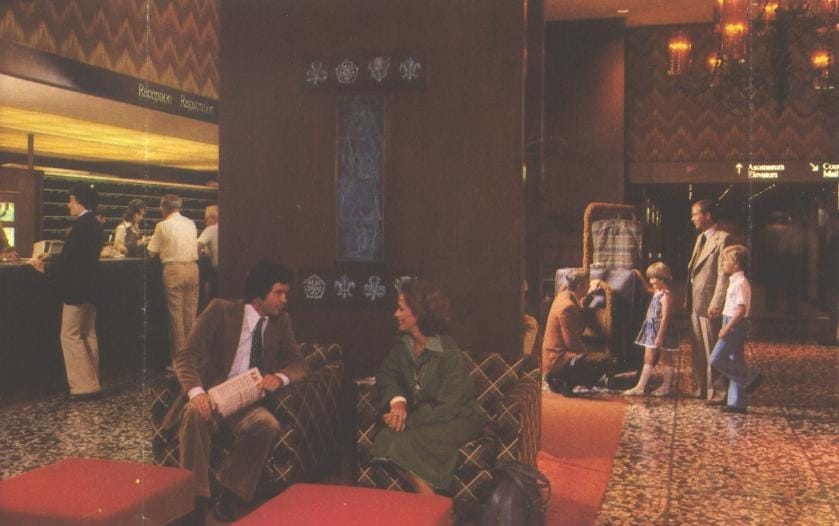
From day one, the hotel announced itself as unmistakably of the city. The three-day opening gala featured Guy Lombardo’s orchestra and Montreal singer Guylaine Guy performing on opening night. The interior, designed around a “New France” theme, featured carved wooden panels, stained glass murals, ceramic tiles, and bronze elevator doors, each commissioned from Quebec artists. Whatever you thought of the name, the building itself was evidently rooted.
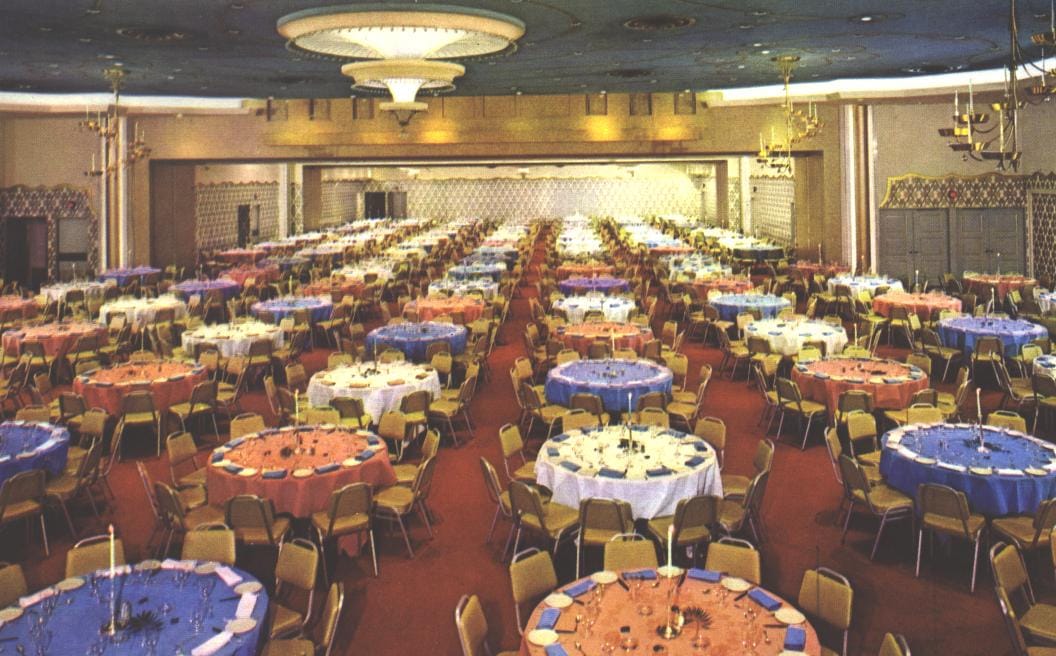
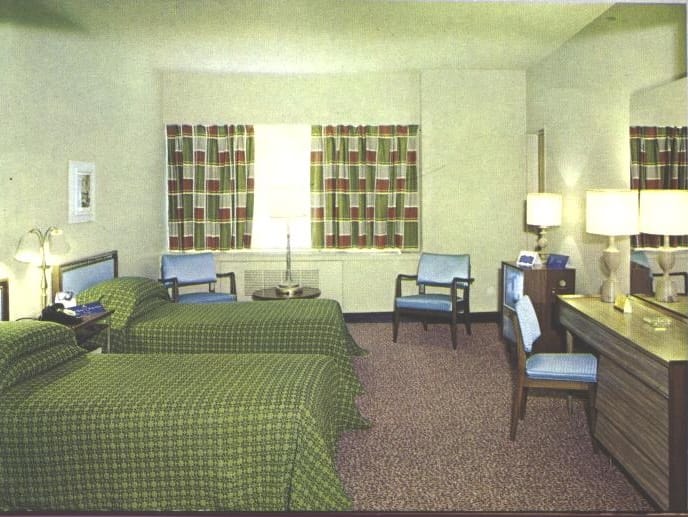
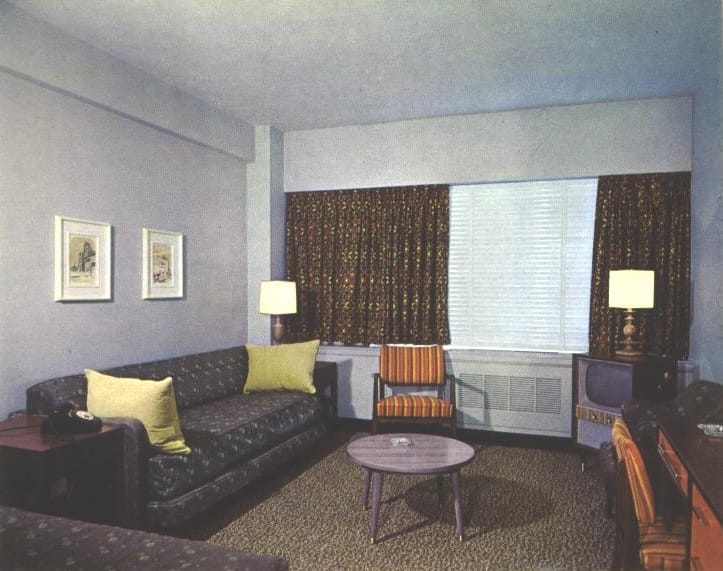
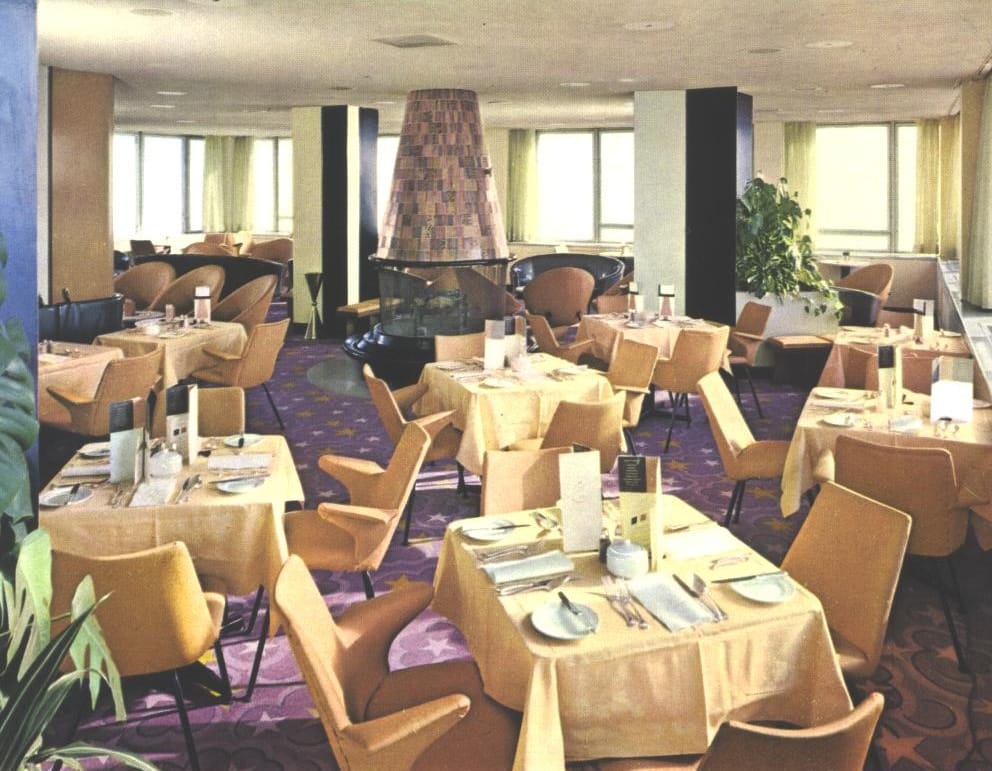
Clockwise from the lop left: The grand salon, a standard room, a 21st floor restaurant, and junior suite—all in 1958.
Famous guests & Defining moments
The parade of notable visitors began almost immediately: Fidel Castro became the first head of state to stay at the hotel in April 1959. Queen Elizabeth II arrived just two months later, the first of four visits she would make over the years. The decades that followed brought an extraordinary roll call: French Presidents Charles de Gaulle and Jacques Chirac, Soviet Premier Mikhail Gorbachev, U.S. Presidents Jimmy Carter and George W. Bush, South African President Nelson Mandela, and cultural icon Joan Crawford all passed through its doors. During Expo 67, when Montreal briefly became the centre of the world, 50 of the 60 visiting heads of state took up residence in the hotel's suites.
But the moment that would define the Queen E for generations came in the spring of 1969, and Montreal almost didn't get: John Lennon and Yoko Ono had planned their second "Bed-In for Peace" for New York, but Lennon's prior drug conviction kept him out of the United States. They tried the Bahamas next, spent one uncomfortable night in the heat, and looked north. Montreal got the call.
They checked into Room 1742 on May 26th and held court for seven days, throwing flower petals into the air often enough that housekeeping had to vacuum the floors several times a day. On June 1st, with local recording engineer André Perry behind four microphones and a four-track recorder, Lennon recorded "Give Peace a Chance" with Tommy Smothers of the Smothers Brothers on guitar, and Allen Ginsberg and Petula Clark among those crowded into the suite. The song peaked at number 14 on the Billboard Hot 100 and became the defining anthem of the anti-Vietnam War movement.
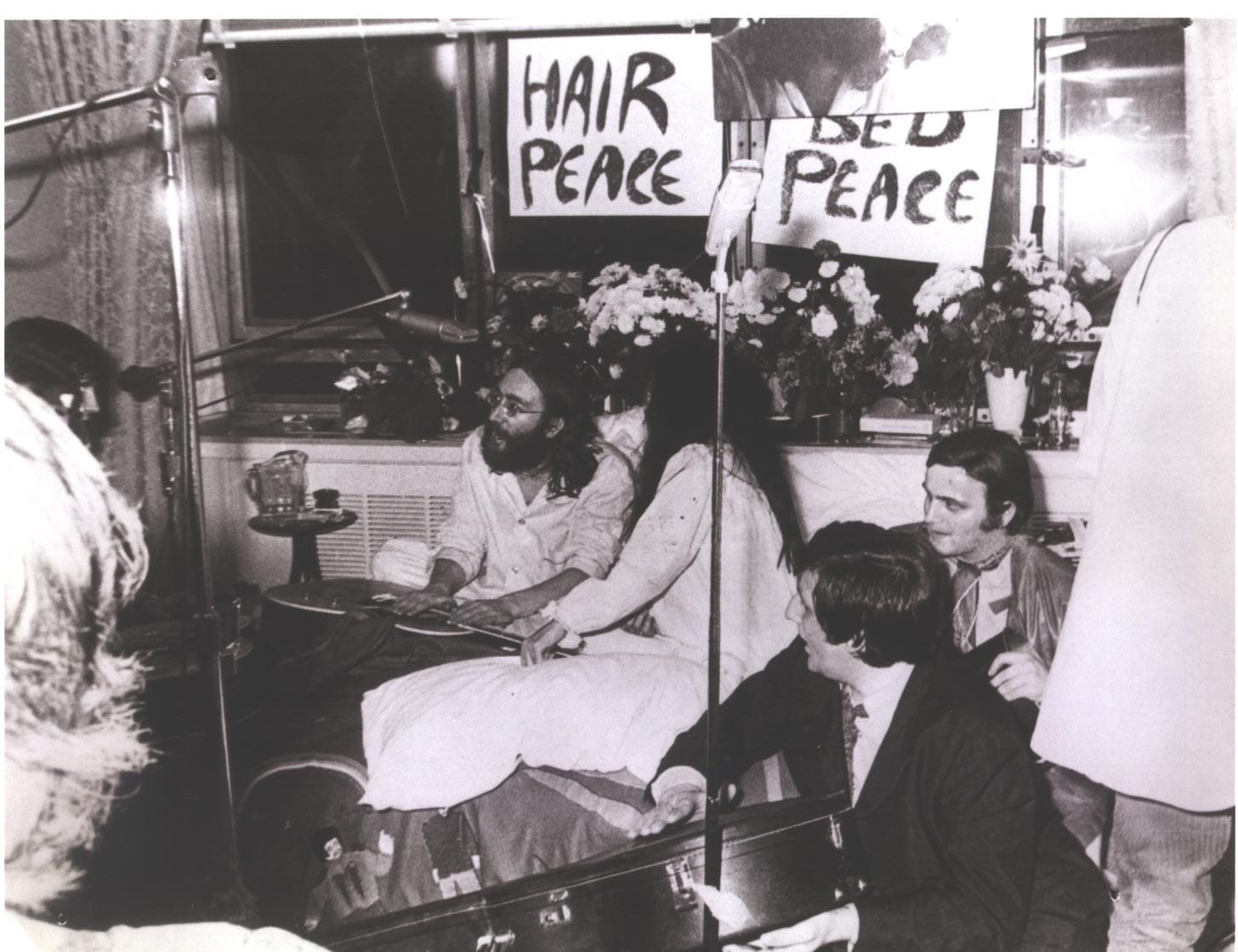
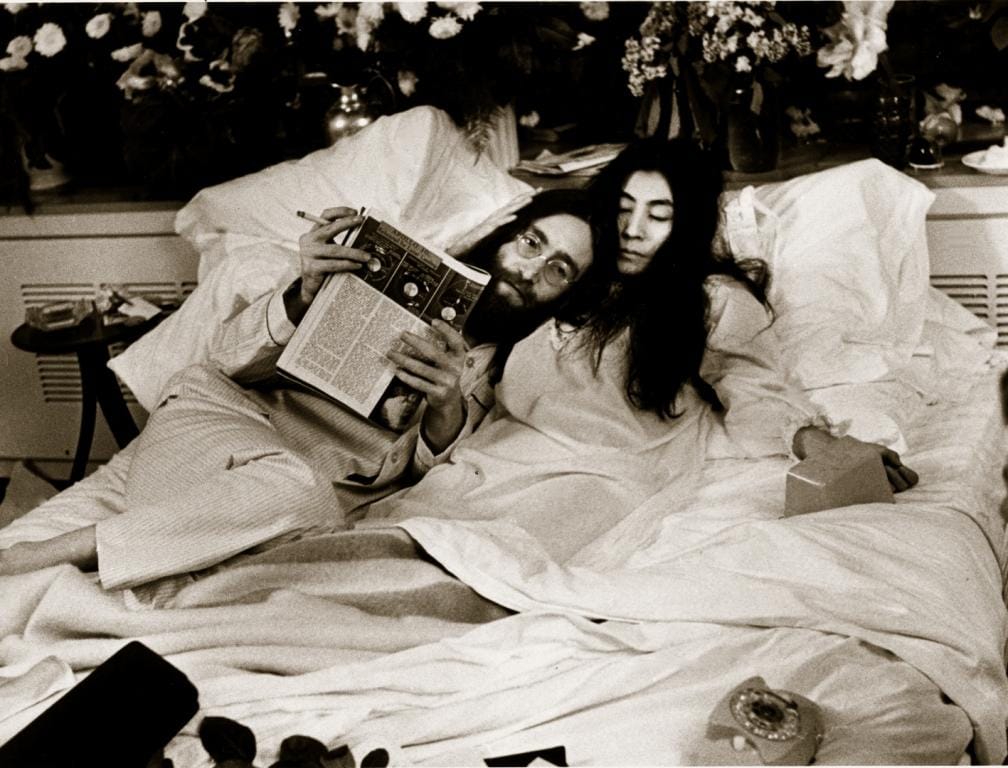
The room still carries that charge. Guests will tell you they feel a presence after staying there, saying there's a special vibration.
The following year brought a different kind of history. In October 1970, with the FLQ having kidnapped two prominent politicians and Prime Minister Pierre Trudeau invoking the War Measures Act, Premier Robert Bourassa quietly moved provincial government operations into the Queen E, coordinating Quebec's response to the crisis from inside its walls—unknown to the public at the time.
And in 1976, the hotel served as headquarters for the International Olympic Committee, welcoming international delegations as Montreal hosted the Summer Games.
A table worth remembering
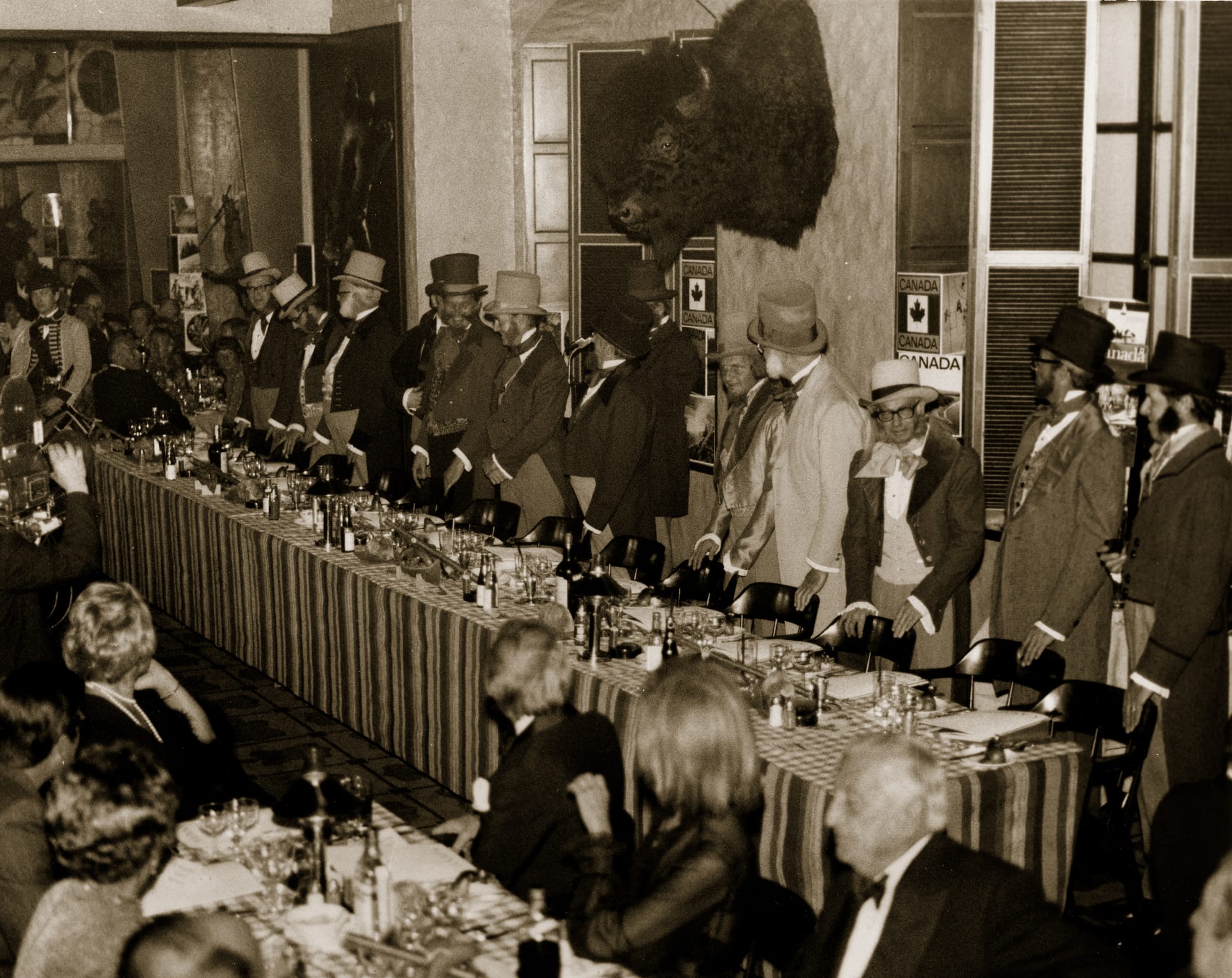
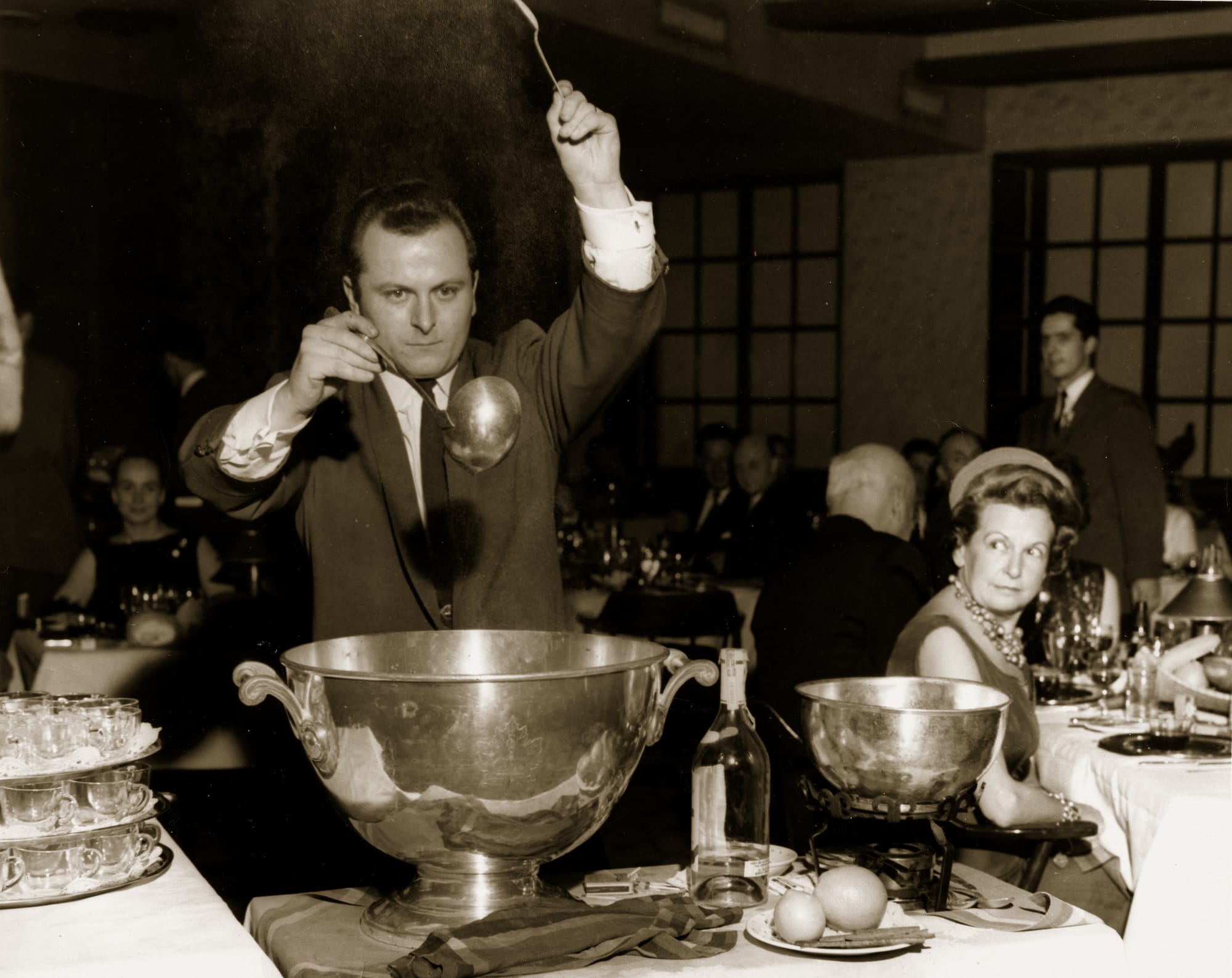
No history of the Queen E is complete without the Beaver Club. Open from the hotel's first day in 1958 until its quiet closure in early 2014, it was considered one of the finest restaurants in the country for much of its run, earning a Mobil Five-Star rating, CAA Four Diamonds, and a Wine Spectator Award of Excellence. Its name nodded to Montreal's original Beaver Club, founded in the 18th century by fur traders and merchants who had wintered in the pays d'en haut. The restaurant fed queens, heads of state, and ordinary Montrealers alike for over five decades, setting a standard for grand hotel dining that the Queen E has carried forward.
Today, that spirit lives on at Rosélys, the hotel’s signature restaurant, where French and Québec culinary traditions meet with a decidedly local sensibility.
The Queen E Today
After a $140-million renovation completed in 2017, Fairmont The Queen Elizabeth emerged with 950 updated rooms, a food market, a spa, a cocktail terrasse overlooking Place Ville Marie, and nearly double the meeting space. The design by Sid Lee Architecture sought to honour the hotel’s mid-century character while opening it fully to the city.
The John Lennon and Yoko Ono Suite remains bookable, and more alive than ever: in a collaboration with creative studio MASSIVart, the room has been transformed into a fully immersive, interactive experience complete with virtual reality, archival surprises tucked throughout, a guitar, a vintage telephone, and a living room recreated to match the original bed-in layout, bed beneath the window and all. The suite won a CODAaward for best hospitality project in 2020, and continues to draw guests from around the world who come not just to sleep in history, but to step inside it.
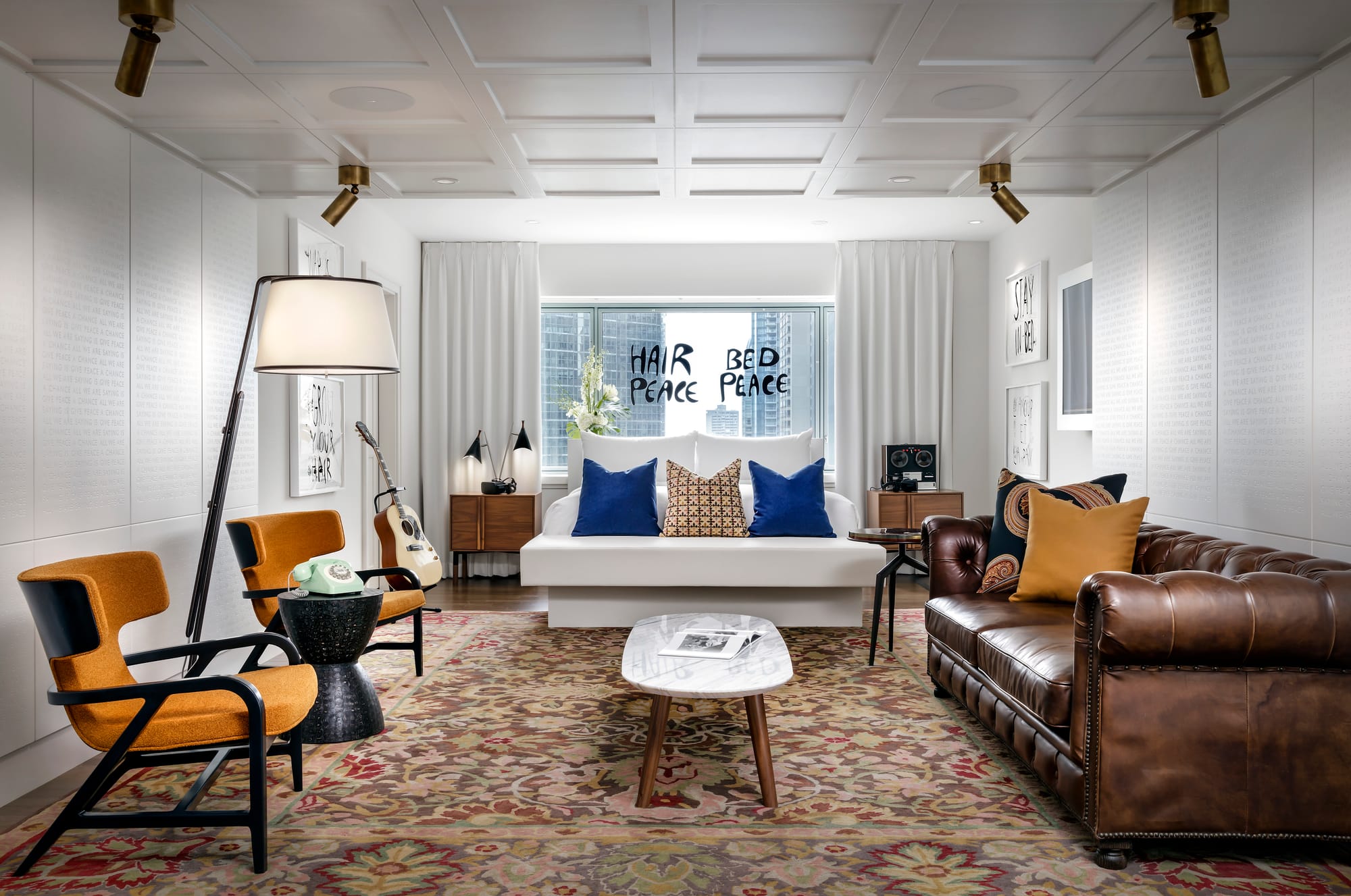
Situated at the heart of Montreal’s Nouveau Centre, the hotel serves as an anchor for the downtown core's ongoing transformation. Perched directly above Central Station with seamless access to the Underground City, it remains deeply woven into the city's daily rhythm.
Now a member of Historic Hotels Worldwide, the property operates under a "for Montrealers, by Montrealers" philosophy. This ethos is found at Marché Artisans, an 8,000-square-foot epicurean market where local talent takes center stage. The experience continues at the aforementioned Rosélys, and the retro-modern bar channeling 1960s glamour Nacarat. Those looking to elevate an event can head up to Espace 21, a rooftop glass structure offering panoramic views and a boundary-pushing venue for up to 220 guests.
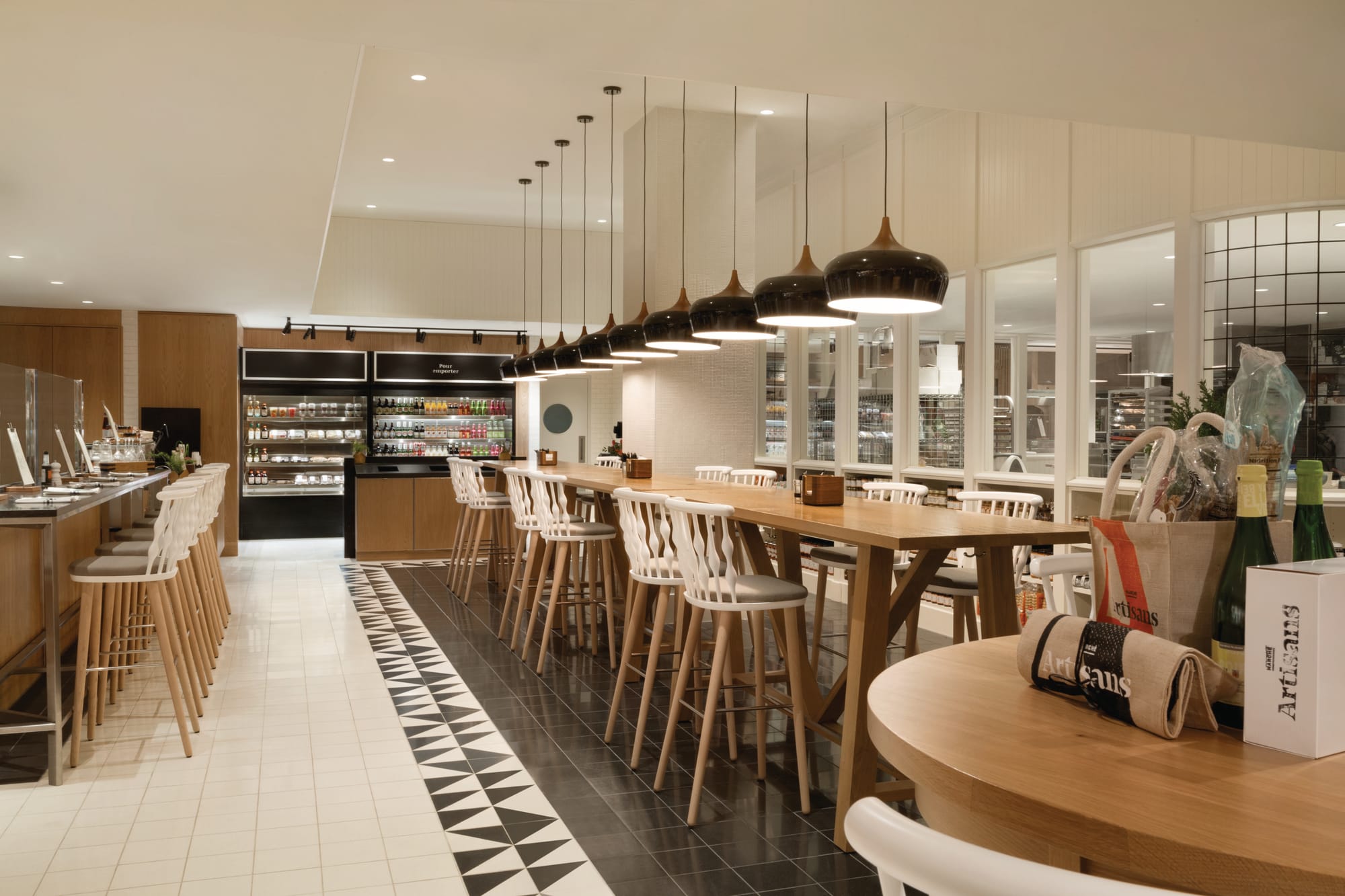
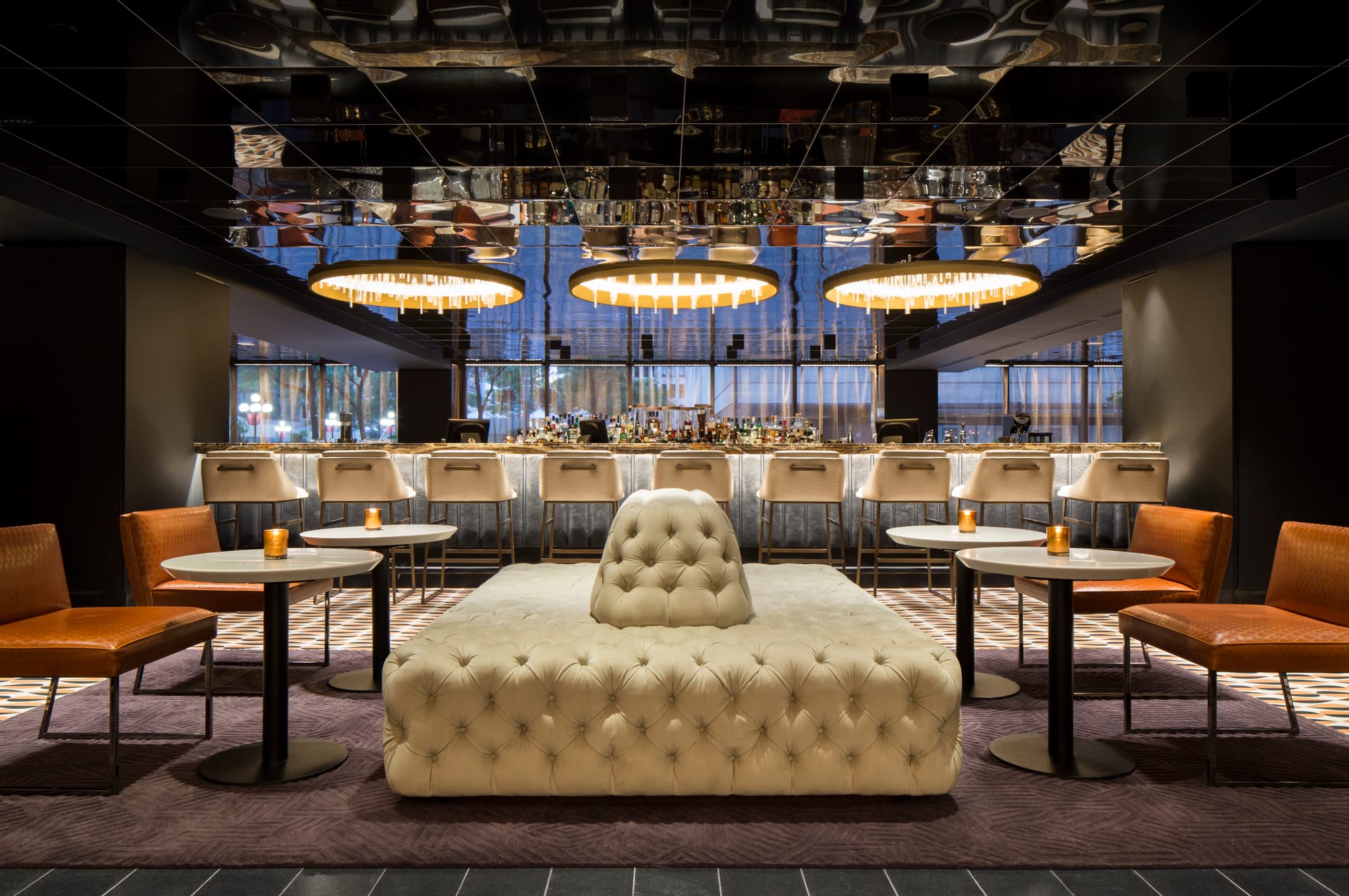
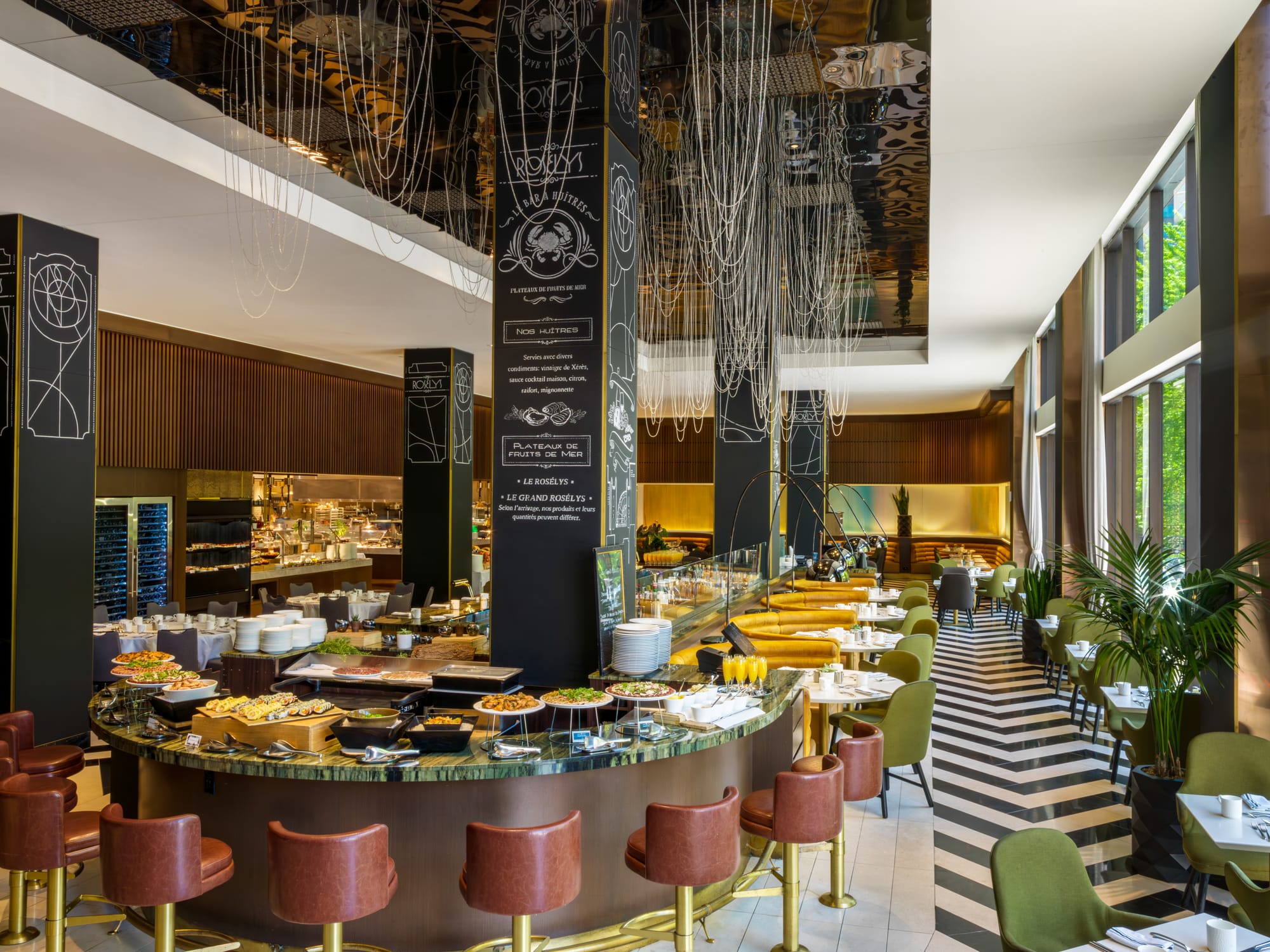
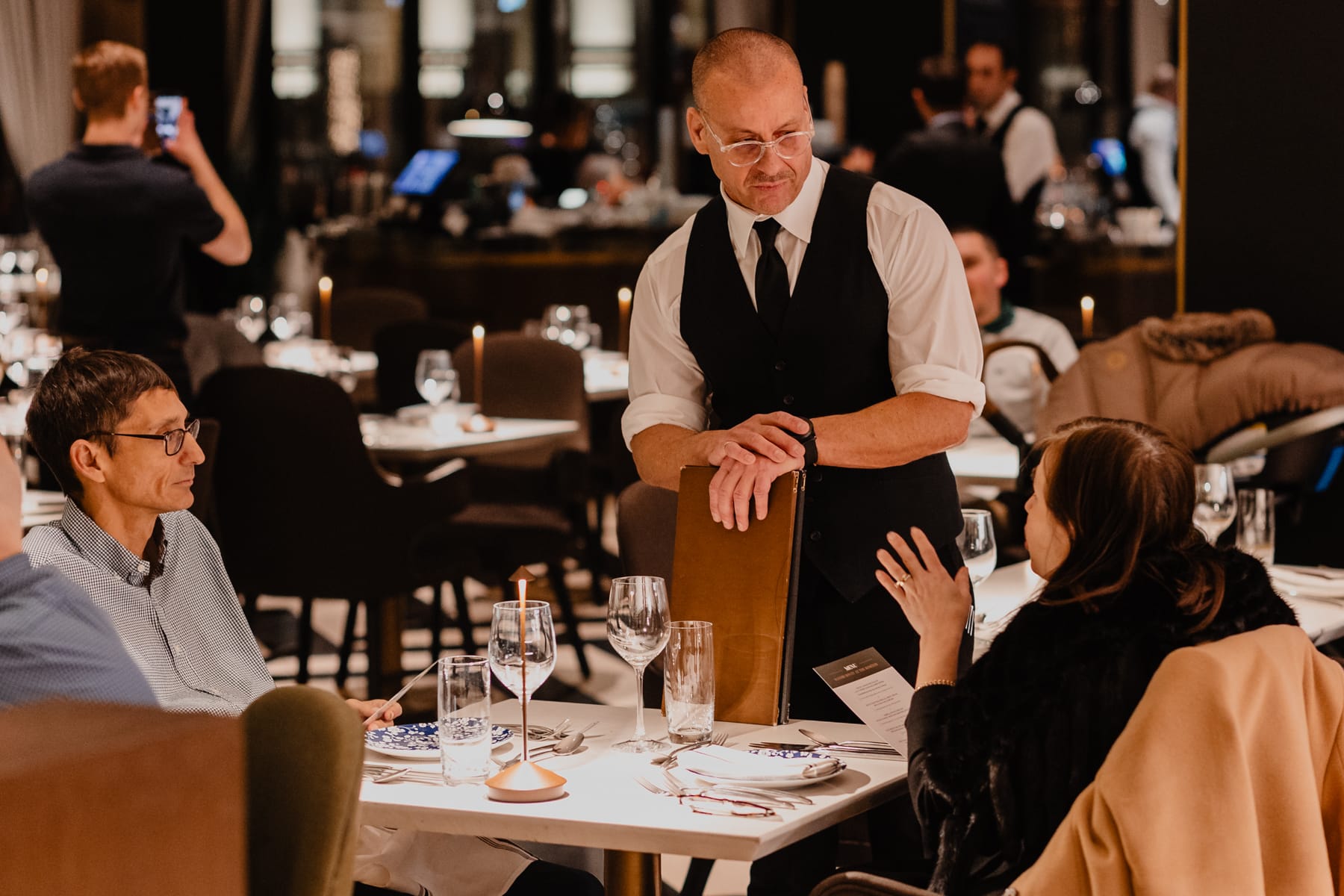
Clockwise from top left: Marché Artisans, Nacarat, and Rosélys.
More recently, the hotel has leaned into cultural moments with flair, positioning itself as a stage for the city’s cultural life: The Cabaret Céleste, a theatrical creation by Cirque Eloize, brought a star-themed cabaret experience to the hotel while the Barbie Dream Suite turned Suite 1700 into a pink pop-culture destination for a new generation of guests.
"For over 60 years, Fairmont The Queen Elizabeth has stood at the intersection of culture, hospitality, and history in Montreal," says the hotel. "More than just a hotel, it is a landmark woven into the fabric of this city."


Comments
Welcome to The Main's comments section!
Share your thoughts and join the conversation. Please be respectful and constructive.
No comments yet. Be the first!